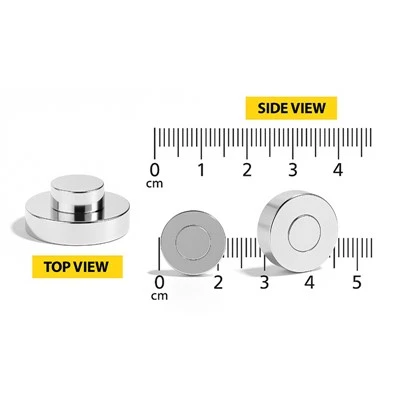

Hey there! As a supplier of cylindrical magnets, I've seen firsthand how the orientation of these little powerhouses can make a huge difference in their interaction. In this blog post, I'm gonna break down how the orientation of cylindrical magnets affects their magnetic fields and the forces they exert on each other.
First off, let's talk a bit about what cylindrical magnets are. They're basically magnets shaped like cylinders. Simple, right? These magnets are super versatile and are used in a wide range of applications, from small electronic devices to large industrial machinery. We offer different types of cylindrical magnets on our website, such as High Remanence Cylindrical Magnets, Nickel Plating Cylindrical Magnets, Strong Magnetic Force Cylindrical Magnets, High Coercive Force Cylindrical Magnets, and High Adhesive Force Cylindrical Magnets. Each type has its own unique properties that make it suitable for specific uses.
Now, let's get into the orientation part. The orientation of a cylindrical magnet is all about which way its poles are facing. Every magnet has a north pole and a south pole. When you bring two magnets close to each other, the way their poles are aligned determines whether they'll attract or repel each other.
If you have two cylindrical magnets and you line them up so that the north pole of one faces the south pole of the other, they'll attract each other. It's like they're drawn to each other, and they'll stick together if they're close enough. The magnetic field lines from the north pole of one magnet flow into the south pole of the other, creating a strong attractive force. This is the most common way we see magnets used in everyday applications, like in magnetic closures or in holding objects together.
On the other hand, if you line up the two magnets so that their north poles or south poles are facing each other, they'll repel each other. It's like they're pushing each other away. The magnetic field lines from the similar poles repel each other because they don't want to mix. This property can be really useful in certain applications, like in magnetic bearings, where you want to reduce friction by using the repulsive force between magnets.
But the orientation doesn't just determine whether the magnets attract or repel; it also affects the strength of that interaction. The closer the magnets are to each other and the more perfectly aligned their poles are, the stronger the force will be. For example, if you have two magnets with their north - south poles almost perfectly lined up and you bring them very close together, the attractive force will be quite strong. But if you misalign the poles even a little bit, the force will start to weaken.

In some applications, the exact orientation of the cylindrical magnets can make or break the whole system. Take motors, for example. In a motor, the cylindrical magnets are used to create a rotating magnetic field. If the magnets aren't oriented correctly, the motor won't work efficiently or might not work at all. The orientation affects how the magnetic fields interact with the electric currents in the motor, which in turn affects the torque and speed of the motor.
Another important factor related to orientation is the magnetization direction. Cylindrical magnets can be magnetized in different directions, such as axially (along the length of the cylinder) or radially (across the diameter of the cylinder). Axially magnetized cylindrical magnets have their poles at the two ends of the cylinder. This type of magnetization is often used when you need a strong magnetic field at the end faces of the magnet, like in magnetic sensors.
Radially magnetized cylindrical magnets, on the other hand, have their poles around the circumference of the cylinder. This orientation creates a different type of magnetic field distribution, which can be useful in applications like magnetic couplings. In a magnetic coupling, the radial magnetization of the cylindrical magnets allows for the transfer of torque between two components without any physical contact, which is great for reducing wear and tear.
The shape of the cylindrical magnet also plays a role in how its orientation affects the interaction. Longer and thinner cylindrical magnets will have a different magnetic field distribution compared to shorter and fatter ones. A long, thin magnet will have a more concentrated magnetic field along its axis, while a short, fat magnet might have a more spread - out field. This means that the orientation of these different shaped magnets will have varying effects on the forces they exert on other magnets.

When it comes to choosing the right orientation for a particular application, there are a few things to consider. First, you need to think about the function of the magnets. Are you using them to attract something, repel something, or create a specific magnetic field pattern? Based on that, you can decide whether to use an axial or radial magnetization and how to align the magnets.
Second, you have to consider the physical constraints of the system. Sometimes, the space available might limit how you can orient the magnets. You might have to come up with creative solutions to make the magnets work in the given space while still achieving the desired interaction.
As a supplier of cylindrical magnets, I know that getting the orientation right is crucial for our customers. That's why we're always here to help. Whether you're working on a small DIY project or a large - scale industrial application, we can offer advice on which type of cylindrical magnet to choose and how to orient them for the best results.
If you're in the market for cylindrical magnets, or if you have any questions about their orientation and interaction, don't hesitate to reach out. We're happy to have a chat and help you find the perfect magnets for your needs.