
Hey there! As a supplier of shaped magnets, I've been getting a ton of questions lately about the magnetic materials we commonly use to make these cool-shaped magnets. So, I thought I'd write this blog to share some insights with all of you.
First off, let's talk about what makes a material magnetic. Simply put, a magnetic material is one that can be magnetized or attracted to a magnet. Magnetization happens when the magnetic moments of the atoms in a material align in the same direction. There are basically three types of magnetic materials: ferromagnetic, ferrimagnetic, and paramagnetic. For shaped magnets, we usually focus on ferromagnetic materials because they have the strongest magnetic properties.
Neodymium Iron Boron (NdFeB)
Neodymium Iron Boron, or NdFeB for short, is hands down the most widely used material for strong magnetic force shaped magnets. You can check out our Strong Magnetic Force Shaped Magnets page to see some of the amazing products we've made with this stuff. NdFeB magnets are known for their incredibly high magnetic strength. They can generate a magnetic field that's much stronger than other types of magnets of the same size.
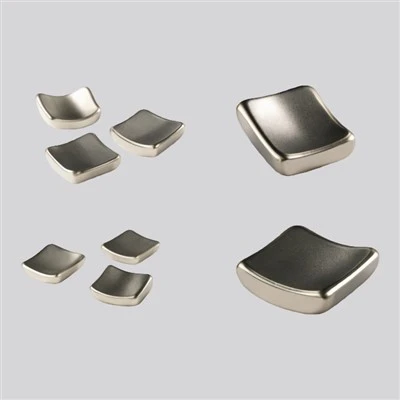
One of the reasons NdFeB is so popular is its cost - effectiveness. It offers a lot of magnetic power at a relatively low cost compared to some other magnetic materials. We can shape NdFeB into all sorts of forms, like triangles. Our Triangle Shaped Magnets are made from NdFeB and are used in a variety of applications, from small electronic devices to industrial machinery.
However, NdFeB does have its drawbacks. It's quite brittle and prone to corrosion. That's why we often coat our NdFeB shaped magnets with materials like nickel. You can find our Nickel Plating Shaped Magnets which not only protect the magnet from rusting but also give it a nice, smooth finish.
Samarium Cobalt (SmCo)
Samarium Cobalt magnets are another great option for shaped magnets. These magnets have excellent temperature stability, which makes them ideal for applications where the magnet will be exposed to high temperatures. For example, in aerospace or high - performance motors, SmCo magnets can maintain their magnetic properties even when things get hot.

The magnetic strength of SmCo is also very high, although not quite as strong as NdFeB in some cases. But what it lacks in raw strength, it makes up for in its resistance to demagnetization. They're more resistant to the effects of external magnetic fields, so they can hold their magnetism better over time. We use SmCo to make some of our high - end shaped magnets that need to perform reliably in tough environments.
Ferrite Magnets
Ferrite magnets, also known as ceramic magnets, are a more affordable option. They're made from a combination of iron oxide and other metallic elements. Ferrite magnets are not as strong as NdFeB or SmCo, but they have their own advantages. They're very resistant to corrosion, so they don't need a special coating like NdFeB.
Ferrite magnets are commonly used in applications where you don't need extremely high magnetic strength but still want a reliable magnetic force. For example, in refrigerator magnets or some small - scale electronic devices. They're also easy to shape, so we can make all sorts of interesting designs with them, like our Strong Stability U - shaped Magnets which are often used in simple magnetic locking systems.
Alnico Magnets
Alnico magnets are made from a combination of aluminum, nickel, and cobalt. They were some of the first high - strength magnets ever developed. One of the key features of Alnico magnets is their high coercivity, which means they can maintain their magnetism even in the presence of strong external magnetic fields.
Alnico magnets have a very high Curie temperature, which is the temperature at which a magnet loses its magnetic properties. This makes them suitable for high - temperature applications. However, they're not as strong as NdFeB magnets in terms of magnetic field strength. We use Alnico to make shaped magnets for some specialized applications, like in certain types of sensors.
Applications of Different Shaped Magnets
The choice of magnetic material for a shaped magnet often depends on its intended application. For example, if you're looking for magnets with high adhesive force, like for holding heavy objects or in a magnetic clamping system, our High Adhesive Force Shaped Magnets made from NdFeB are a great choice.
In the electronics industry, small and precise shaped magnets are needed. Ferrite magnets are often used here because they're cost - effective and can be easily manufactured into the required shapes. In the automotive industry, where parts need to withstand high temperatures and vibrations, SmCo or Alnico magnets might be the better option.
Conclusion
So, there you have it! These are some of the magnetic materials we commonly use to make shaped magnets. Each material has its own unique properties, advantages, and disadvantages. Whether you need strong magnetic force, high temperature stability, corrosion resistance, or just an affordable option, there's a magnetic material out there that will suit your needs.
If you're in the market for shaped magnets and want to learn more about which material is best for your specific application, feel free to reach out to us. We're here to help you make the right choice and provide you with high - quality shaped magnets. Let's start that conversation and see how we can work together!