As humanoid robots and compact industrial equipment continue to develop, engineers have less space to accommodate internal components. Motors, sensors, and moving joints must fit into increasingly compact structures while meeting their required operating conditions. This places greater importance on selecting components that match the overall design.
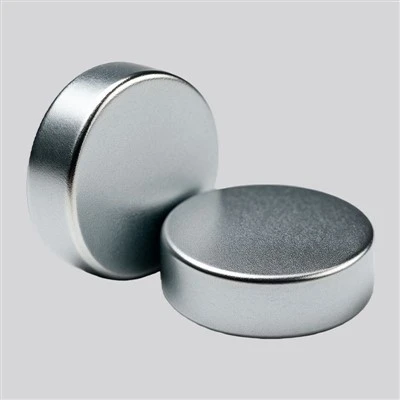
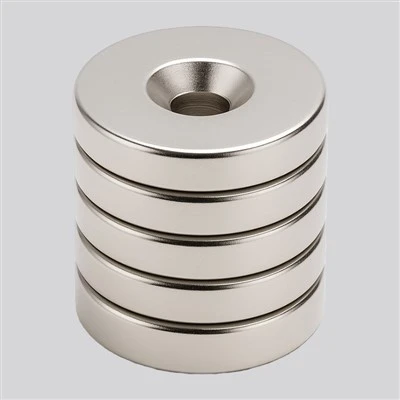
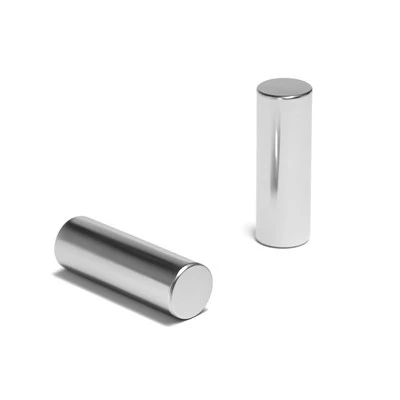
Rare earth ring magnets are used in assemblies where a magnet needs to fit around a shaft, bearing, or other cylindrical component. Made from neodymium iron boron (NdFeB), they are commonly found in servo motors, robotic actuators, position sensors, and other precision equipment.
When selecting a ring magnet, the magnetic grade is only one consideration. The outer diameter, inner diameter, thickness, and magnetization direction all affect how the magnet fits and functions within an assembly. Operating temperature also needs to be considered, particularly in motors and components that generate heat during use.
Applications of Rare Earth Ring Magnets in Humanoid Robots
A humanoid robot contains numerous motors, joints, sensors, and mechanical connections. Many of these components operate in relatively small spaces, where the magnet must fit the assembly without interfering with nearby parts.
The central opening of a ring magnet allows it to be installed around a shaft, bearing, or other cylindrical structure. This makes the design relevant to several parts of a robotic system.
Servo motors and joint actuators
Ring magnets can be incorporated into motor assemblies used to drive robotic arms, legs, and other moving joints. Their magnetic properties contribute to the motor's overall magnetic circuit, while the ring structure accommodates shaft-based configurations.
Position and angle sensing
When used with Hall-effect sensors or magnetic encoders, ring magnets can form part of a position-sensing arrangement. The magnetization pattern and magnetic field need to match the sensor design to achieve the required feedback.
Robotic hands and compact mechanisms
Small ring magnets may also be used in robotic hands, gripping mechanisms, and compact actuators. In these applications, the available installation space and the relationship between the magnet and surrounding components are important design considerations.
Sensor and vision modules
Some sensor housings and vision-related assemblies use magnets for positioning, mounting, or internal magnetic functions. A ring-shaped design can be useful when the assembly includes a central shaft or cylindrical mounting structure.
The magnet's contribution depends on the complete assembly. Motor geometry, air gap, sensor position, and control design also affect the final system performance.
Ring Magnet Dimensions and Performance Requirements
Before selecting rare earth ring magnets, engineers should confirm the main dimensions and magnetic requirements. A magnet that fits the available space but does not meet the required magnetic performance may still need to be redesigned.
1. Outer Diameter, Inner Diameter, and Thickness
Three dimensions define the basic geometry of a ring magnet:
• Outer diameter (OD)
• Inner diameter (ID)
• Thickness
The outer diameter determines how much installation space the magnet occupies. The inner diameter needs to accommodate the shaft or mounting structure. Thickness also affects the available magnetic material and the overall magnetic design.
For compact robotic components, dimensional accuracy can affect assembly clearance and positioning. Jinconn's reference small ring magnet has a dimensional tolerance of ±0.05 mm. For other sizes, the achievable tolerance should be reviewed according to the magnet's dimensions and processing requirements.
When requesting a quotation, providing a technical drawing is usually more useful than supplying nominal dimensions alone. It allows the required geometry and critical tolerances to be reviewed together.
2. Operating Temperature
Temperature is an important consideration for magnets used in motors and robotic joints. These components may generate heat during continuous operation, so the magnet needs to match the expected working environment.
The reference N35 small ring magnet has a specified operating temperature of up to 80°C. If the application involves higher temperatures, a suitable high-temperature grade can be discussed.
It is also important to consider how long the magnet will operate at elevated temperatures. The required magnetic properties, operating conditions, and safety margin should all be reviewed before confirming the material.
3. Magnetization Direction
The magnetization direction determines how a ring magnet produces its magnetic field. Common configurations include axial and diametrical magnetization, while some applications require a specific pole arrangement.
For motor and encoder applications, this detail needs to match the magnetic circuit or sensing arrangement. Therefore, buyers should provide the required magnetization direction or relevant assembly drawing when requesting a custom ring magnet.
Tailoring Magnet Dimensions and Properties to Your Design
Not every application can use a standard ring magnet. A robotic joint may require a particular inner diameter to fit its shaft, while a compact sensor may need a thinner magnet to fit inside its housing.
With custom rare earth ring magnets, manufacturers can adjust the magnet specifications to suit the product design. Depending on the project, customization may include:
• Outer diameter, inner diameter, and thickness
• NdFeB grade and magnetic properties
• Dimensional tolerances
• Magnetization direction and pole arrangement
• Surface coating
• Operating temperature requirements
The priorities may differ from one application to another. For example, a motor manufacturer may focus on magnetic performance and dimensional consistency. A sensor manufacturer may pay closer attention to the magnetic field and pole arrangement.
Providing these requirements at the beginning of the project helps reduce unnecessary design changes later.
Packaging and Transportation
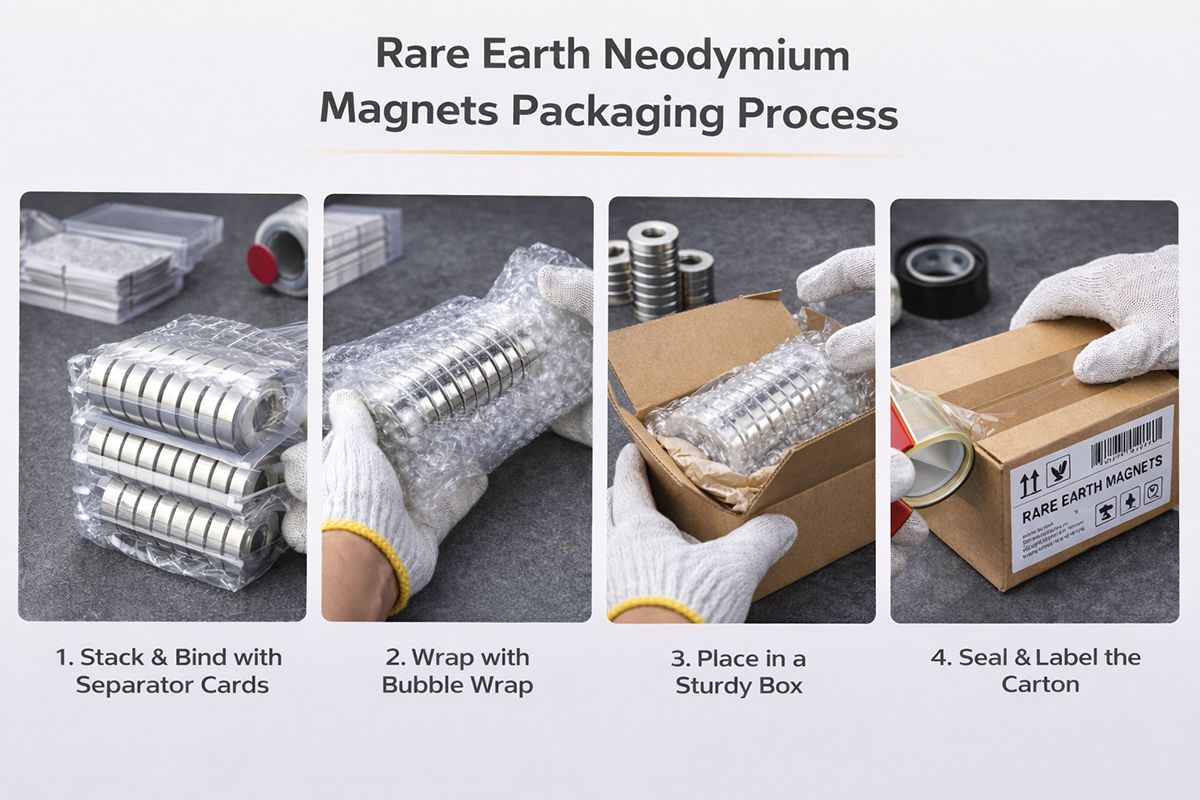
NdFeB magnets are relatively brittle. Although they have strong magnetic properties, they can chip or crack if they collide with hard surfaces during handling.
For this reason, packaging needs to keep individual magnets separated and prevent excessive movement. Jinconn's packaging process can include spacers, stable stacking, bubble wrap or foam protection, and reinforced cartons.
These measures help protect the magnets during storage and transportation. For bulk orders, clear labeling and organized packing also make it easier to identify and handle different batches after delivery.
Custom Magnet Solutions for Industrial Applications
Founded in 2011, Jinconn manufactures permanent magnets and custom magnet assemblies for a range of industrial applications. Its NdFeB products are used in automotive systems, consumer electronics, industrial automation, and other equipment.
For projects involving industrial ring magnets, customers can share technical drawings, samples, or application details for an initial review. These references help clarify the required dimensions, magnetic properties, and installation conditions.
Jinconn supports customization based on specific project requirements, including magnet size, material grade, dimensional tolerance, surface coating, and magnetization direction. Engineering discussions can also cover magnet design and magnetic circuit integration, particularly when the component needs to fit an existing product structure.
If you are sourcing custom rare earth ring magnets for robotic systems, motors, sensors, or other equipment, contact Jinconn with your drawings or specifications. The team can review the details and discuss the appropriate options for your application.