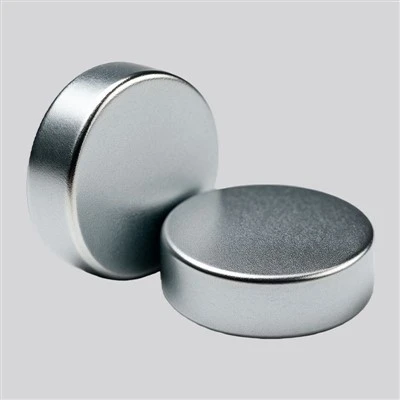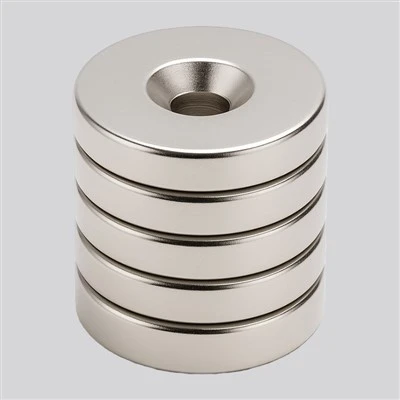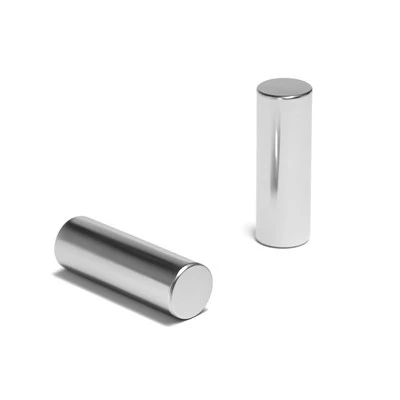
Magnets used in industrial equipment often need to fit specific spaces or work alongside other components. Standard disc, block, and ring magnets may not meet every design requirement, particularly when the available space, magnet shape, or magnetization direction is limited. In such cases, custom-engineered industrial shaped magnets can be made to suit the product's structure and intended use.
Selecting a suitable magnet involves more than choosing a magnetic grade. Its dimensions, tolerances, magnetic force, operating temperature, and installation method all need to be considered. Taking these factors into account early in the design process helps ensure that the magnet fits the assembly and performs as required.
Why Standard Magnet Shapes May Not Be Suitable
In compact equipment, the available installation space is often limited. A standard magnet may provide sufficient magnetic force but still create problems during assembly. It may interfere with nearby components, leave unnecessary gaps, or require changes to the original product design.
Shaped magnets help address these issues by following the dimensions and geometry of the application. Depending on the design, they can be made with curved edges, irregular profiles, holes, grooves, or other specific features.
For example, magnets used in miniature motors, electronic devices, and sensor assemblies may need to fit around shafts or other internal components. A suitable shape can simplify installation and reduce the need for additional fixing structures.
Before selecting a magnet, it is useful to consider:
• Available installation space and surrounding components
• Required magnetic force and working distance
• Magnet dimensions and allowable tolerances
• Magnetization direction and polarity
• Operating temperature and environmental conditions
• Coating and assembly requirements
These details provide a clearer starting point for selecting the material and manufacturing process.

Magnetic Grade Should Match the Application
NdFeB magnets are commonly selected when an application requires strong magnetic performance within a relatively small space. However, a higher grade does not automatically mean a better solution.
The appropriate grade depends on the required magnetic force, working temperature, installation conditions, and overall design. For some applications, N42 may provide sufficient performance without requiring a higher grade.
For reference, one of Jinconn's N42 shaped magnet models has the following specifications:
|
Parameter |
Specification |
|
Magnetic Grade |
N42 |
|
Dimensions |
D10 × 3 mm |
|
Br |
≥13.2 kGs |
|
Hcj |
≥10.8 kOe |
|
Dimensional Tolerance |
±0.05 mm |
|
Maximum Working Temperature |
≤80°C |
|
Surface Magnetic Field |
1700 Gauss |
|
Magnetic Flux |
1.8 mWb |
The surface magnetic field is measured using a TM-801 Gauss meter, while magnetic flux is measured with a fluxmeter. These values apply to the specified reference model. Actual results may vary with magnet dimensions, magnetization direction, measurement position, and application conditions.
For projects with different magnetic requirements, the grade and dimensions can be reviewed according to the product design.
Dimensions and Tolerances Affect Assembly
The shape of a magnet is closely related to how it fits into the finished product. Even a small dimensional difference may affect positioning, clearance, or contact with adjacent parts.
For this reason, dimensional tolerance should be considered during the early design stage. A tolerance of ±0.05 mm is available for the reference N42 model, while the achievable tolerance for other shapes depends on their geometry, size, and processing requirements.
Machining methods also vary according to the magnet's structure. Simple profiles may require less processing, while irregular shapes or small features can involve additional grinding and inspection.
When preparing a drawing, buyers should clearly identify the critical dimensions rather than applying the tightest tolerance to every feature. This helps avoid unnecessary processing costs while keeping the parts suitable for assembly.
Consider Temperature and Surface Protection
Temperature is another important factor when selecting NdFeB magnets. Magnetic properties can change when a magnet operates outside its specified temperature range. Therefore, the maximum operating temperature should be confirmed before choosing the grade.
The reference N42 model is specified for working temperatures up to 80°C. If the application involves higher temperatures, a suitable high-temperature grade should be considered. The final selection depends on the required magnetic properties and actual operating conditions.
Surface treatment also needs attention. Nickel coating is commonly used on NdFeB magnets to provide surface protection. Other coating options may be considered according to the operating environment, exposure to moisture, and assembly requirements.
For equipment used in humid or demanding environments, buyers should provide the expected conditions so that the coating can be selected accordingly.
Magnetization and Packaging Are Part of the Process
A shaped magnet must have the correct magnetization direction to function as intended. Depending on the design, magnetization may be axial, diametrical, radial, or arranged in another specified direction.
This is particularly important for magnets used in motors, sensors, and magnetic assemblies. If the magnetization direction does not match the design, the component may not produce the expected magnetic field.
Jinconn uses pulse magnetization equipment for magnetizing magnets according to product requirements. Before shipment, magnets can also go through visual and dimensional checks, followed by arrangement and protective packaging.
Because NdFeB magnets are brittle and can attract nearby metal objects, packaging needs to account for both physical protection and magnetic properties during transportation. Vacuum packaging and reinforced outer packaging can be used where appropriate.
Custom Shaped Magnet Supply from Jinconn
Founded in 2011, Jinconn focuses on permanent magnets and custom magnet assemblies. Its product range includes NdFeB magnets in different shapes and specifications for industrial and electronic applications.
For projects requiring shaped magnets, customers can provide drawings, samples, or application details. Based on the available information, the required dimensions, magnetic grade, tolerance, coating, and magnetization direction can be discussed.
Customization is not limited to standard disc or block designs. Magnets can also be developed in irregular shapes to suit specific installation spaces and product structures.
With experience in magnet manufacturing and related assemblies, Jinconn supports applications in automotive systems, consumer electronics, industrial automation, motors, and sensors.