Neodymium magnets are used in many products, from small electronic devices to industrial motors and automotive components. Their strong magnetic properties allow manufacturers to use relatively small magnets in applications where space is limited.
However, not all neodymium magnets have the same shape, grade, or performance. Some applications require a simple disc magnet, while others need a ring, curved segment, or specially shaped component. The choice depends largely on the product structure and the way the magnet works with surrounding parts.
When comparing neodymium magnets types, buyers should look at three main aspects: physical shape, magnetic grade, and operating conditions. Understanding these differences helps narrow down the options before requesting samples or starting production.
Common Shapes of Neodymium Magnets
Magnet shape affects installation, positioning, and the space available for other components. The following are some commonly used types.
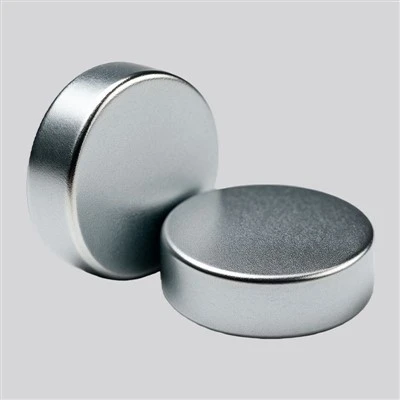
• Disc Magnets
Disc magnets have a flat, circular shape and are often used in speakers, sensors, magnetic closures, and small electronic products. Their simple structure makes them suitable for applications that require a compact magnet with axial magnetization.
• Ring Magnets
Ring magnets have a central hole that allows shafts, screws, or other components to pass through. They are commonly found in motors, magnetic couplings, and rotating assemblies. Depending on the application, their magnetization direction may also need to be specified.
• Block and Cube Magnets
Block magnets have a rectangular shape, while cube magnets have equal length, width, and height. Both types are used in fixtures, holding systems, and industrial equipment. Their flat surfaces also make them convenient for mounting or bonding.
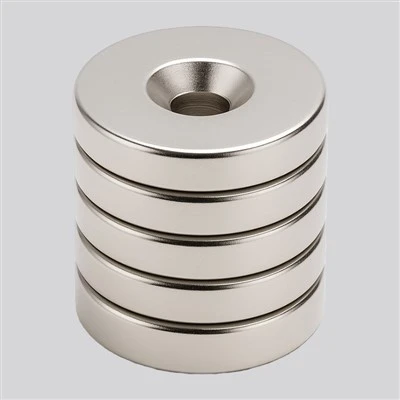
• Countersunk Magnets
Countersunk magnets feature a recessed hole for screw installation. This design helps secure the magnet directly to a surface and reduces the need for separate mounting structures. They are often used in fixtures, magnetic holders, and removable components.
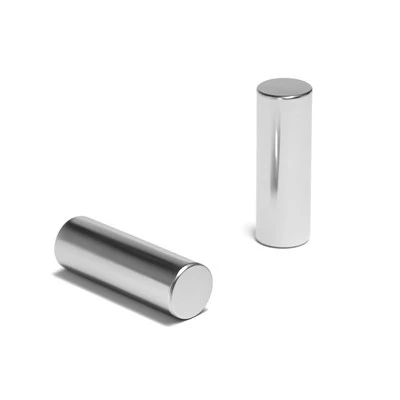
• Cylindrical, Bar, and Tile Magnets
Cylindrical magnets have a round cross-section and are used in sensors, motors, and other compact assemblies. Bar magnets provide a longer magnetic structure, while tile magnets are commonly used in motor designs and curved magnetic assemblies.
• U-Shaped and Custom-Shaped Magnets
Some products have limited installation space or unusual internal structures. In these cases, standard shapes may not fit the design. U-shaped and other custom-shaped neodymium magnets can be developed around the required geometry.
How Neodymium Magnet Grades Differ
Shape is only one part of magnet selection. Magnetic grade also affects the performance a component can provide.
Common NdFeB grades include N35, N38, N42, N45, and N52. These grades indicate different maximum energy product levels. In general, a higher grade offers a higher maximum energy product, but it does not automatically make the magnet suitable for every application.
For example, an N42 magnet may already meet the requirements of a compact electronic assembly. Choosing N52 instead may increase material costs without providing a meaningful improvement in the finished product.
Temperature also matters. Standard NdFeB magnets have defined working temperature limits, and their magnetic properties may change when exposed to excessive heat. For applications involving higher temperatures, buyers should consider suitable high-temperature neodymium magnets.
Therefore, the grade should be selected according to the required magnetic performance, operating temperature, available space, and cost target.
What Should You Check Before Choosing a Magnet?
A magnet may match the required dimensions but still fail to perform as expected in the finished product. This often happens when buyers focus only on the magnet's size or grade.
Before choosing between different neodymium magnets types, review the following specifications.
• Dimensions and tolerance: Check the available installation space and identify which dimensions require tighter control.
• Magnetic force: Define the required holding force or magnetic field under actual working conditions.
• Magnetization direction: Confirm whether the magnet needs axial, diametrical, radial, or another magnetization arrangement.
• Operating temperature: Consider the highest temperature the magnet will experience during use.
• Surface coating: Select a coating according to moisture exposure, corrosion risk, and the surrounding environment.
• Assembly method: Determine whether the magnet will be bonded, mechanically fixed, overmolded, or combined with other components.
These details are especially important for motors, sensors, and electronic assemblies. In such products, a small change in magnet position or magnetization direction can affect the performance of the entire assembly.
Custom Neodymium Magnets for Different Production Needs
Standard magnets are suitable for many applications. However, product development does not always follow standard dimensions or shapes.
For example, a brand developing a new electronic device may need a small magnet with a specific thickness and magnetic force. An industrial equipment manufacturer may require an irregular shape that fits around an existing mechanical structure.
In these situations, custom-shaped neodymium magnets offer more room to work with the original product design.
Jinconn supports customized magnet production based on drawings, samples, or application requirements. Depending on the project, • customers can discuss:
• Magnet shape and dimensions
• NdFeB grade and magnetic properties
• Dimensional tolerance
• Surface coating
• Magnetization direction
• Additional components and assembly requirements
Not every project requires a large production run. Jinconn also discusses small-batch orders and specialized specifications that may not fit the standard purchasing requirements of larger suppliers.
For new projects, design assistance and sample arrangements can be discussed before mass production. This gives customers an opportunity to check dimensions, installation, and magnetic performance before moving to the next stage.
From Initial Design to Final Delivery
A clear production process helps customers understand how their magnet orders move forward. It also reduces misunderstandings about specifications, samples, and delivery schedules.
• Requirement Review
The process starts with the customer's drawing, sample, or application description. The team reviews the intended use, required quantity, dimensions, and magnetic specifications.
• Design Confirmation
Next, both sides confirm the magnet's geometry, grade, tolerance, coating, and magnetization direction. If the original design needs adjustment, the engineering team can discuss possible changes.
• Material and Process Selection
After confirming the specifications, the appropriate material and manufacturing process are selected. If the project includes a magnetic assembly, the required accessories and component details are also reviewed.
• Sampling and Production
For projects that require sample approval, the customer can check the physical sample before production proceeds. Once the specifications are confirmed, the order moves into manufacturing.
• Inspection and Shipment
Before shipment, the finished products go through the agreed inspection procedures. The magnets are then arranged and packaged for transportation, with packaging requirements considered according to their physical and magnetic characteristics.
For suitable projects, Jinconn can target a production cycle of around 30 days from design confirmation to delivery. The actual schedule depends on product complexity, order quantity, sample approval, and shipping arrangements.
Custom NdFeB Magnet Manufacturing at Jinconn
Founded in 2011, Jinconn specializes in permanent magnets and custom magnet assemblies. The company supplies NdFeB magnets for automotive systems, consumer electronics, industrial automation, renewable energy, and other manufacturing applications.
Its work covers more than standard magnet production. Jinconn also supports custom magnetic circuit design and system integration, helping customers address requirements involving magnet placement, magnetic orientation, and component compatibility.
For brands and equipment manufacturers, this means they can discuss product requirements directly with a supplier familiar with both individual magnets and magnetic assemblies.
Jinconn's approach focuses on understanding the application before confirming the specifications. Whether a project involves a standard disc magnet or a specially shaped NdFeB component, the goal is to provide a product that fits the intended design and production requirements.
Contact Jinconn to discuss your magnet specifications and find an option that works with your product design.