Selecting the right magnet for a product involves more than finding one that fits its available space. It also needs to provide the required magnetic force and withstand the conditions in which the finished product will operate. While standard magnet sizes may work for some designs, they do not always meet specific installation or performance requirements.
Neodymium rare earth magnets are often used in applications where strong magnetic properties are needed in a compact space. They are commonly found in motors, sensors, electronic devices, and industrial equipment. However, choosing a suitable magnet requires more than checking its magnetic grade. Buyers also need to consider its shape, dimensions, operating temperature, surface coating, and magnetization direction to ensure it fits the intended application.
Applications Across Different Industries
Neodymium magnets, also known as NdFeB magnets, are made primarily from neodymium, iron, and boron. Their magnetic properties make them suitable for products that require considerable magnetic force within limited installation space.
Their use varies depending on the product structure and working conditions.
• Automotive systems: Magnets are used in motors, sensors, positioning mechanisms, and other vehicle components.
• Consumer electronics: Compact magnets can be found in speakers, small motors, magnetic closures, and electronic assemblies.
• Industrial automation: Applications include sensing, positioning, holding, and motion control.
• Renewable energy: Certain motor and generator designs use NdFeB magnets as part of their magnetic systems.
• Manufacturing equipment: Magnetic components support equipment that requires controlled movement, positioning, or holding functions.
Although these applications use the same basic magnet material, their specifications can differ considerably. For example, a magnet inside a compact electronic product may need precise dimensions, while one used in a motor may require particular attention to temperature and demagnetization resistance.
This is why the intended application should be considered before choosing a magnet grade or size.
Magnetic Properties and Technical Requirements
Several technical factors determine whether a neodymium magnet will work as intended. Buyers should consider these properties together rather than relying on a single specification.
• Magnetic Grade and Coercivity
NdFeB magnets are available in different grades. Their magnetic properties include remanence (Br), coercivity (Hcb), intrinsic coercivity (Hcj), and maximum energy product (BHmax).
These values describe different aspects of magnetic performance. For example, remanence relates to the residual magnetic flux density, while intrinsic coercivity indicates resistance to demagnetization.
A higher grade may provide a greater maximum energy product, but it is not necessarily the best choice for every product. The required magnetic output, operating temperature, and magnetic circuit design should all influence the selection.
• Operating Temperature
Temperature can affect the magnetic properties of NdFeB materials. If a magnet operates beyond its suitable temperature range, it may experience a reduction in magnetic performance.
For this reason, engineers should identify both the normal operating temperature and any temporary temperature peaks. Heat-resistant neodymium rare earth magnets may be required for applications exposed to elevated temperatures. The appropriate grade depends on the actual working conditions and required resistance to demagnetization.
• Dimensions and Tolerances
The magnet must match the available installation space. Diameter, thickness, length, width, and other structural features can affect how it fits into the assembly.
In precision applications, even small dimensional differences may cause problems during installation. Buyers should therefore identify critical dimensions and specify the required tolerances on their drawings.
• Magnetization Direction
Magnetization direction determines how the magnetic poles are arranged. Common options include axial, diametrical, and radial magnetization, depending on the magnet's shape and intended function.
This requirement should be confirmed during the design stage. Otherwise, a magnet may have the correct dimensions and grade but still fail to provide the magnetic field arrangement required by the assembly.
Custom Magnet Options for Specific Product Designs
Standard catalog magnets can meet many general requirements. However, they may not suit products with limited installation space, special mounting features, or specific magnetic field requirements.
Custom neodymium rare earth magnets allow buyers to define the magnet according to the product structure. Depending on the design, available configurations may include:
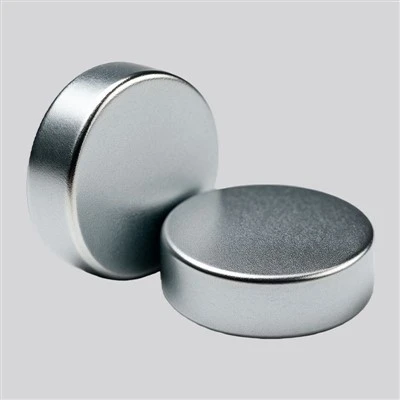
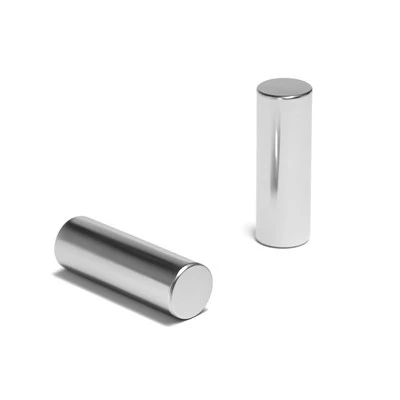
• Disc and cylindrical magnets
• Ring magnets
• Block and rectangular magnets
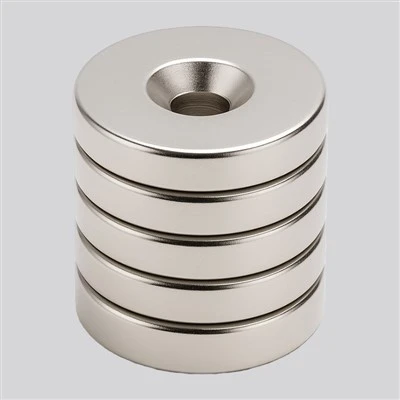
• Countersunk magnets
• Magnets with holes, chamfers, or other specified features
Customization can also cover magnetic grade, dimensions, tolerances, coating, and magnetization direction.
Consider a motor manufacturer that needs a ring magnet with a particular geometry and radial magnetization. A standard ring magnet may have a similar appearance, but its dimensions or pole arrangement might not match the motor design. Similarly, an electronic product may require small neodymium rare earth magnets that fit into a narrow housing.
In both cases, selecting the magnet according to the complete assembly helps reduce the risk of fit and performance issues.
Coating Requirements for Different Applications
Neodymium magnets contain iron and can corrode when exposed to moisture or certain chemicals. Surface treatment helps protect the material, so coating selection should form part of the initial specification.
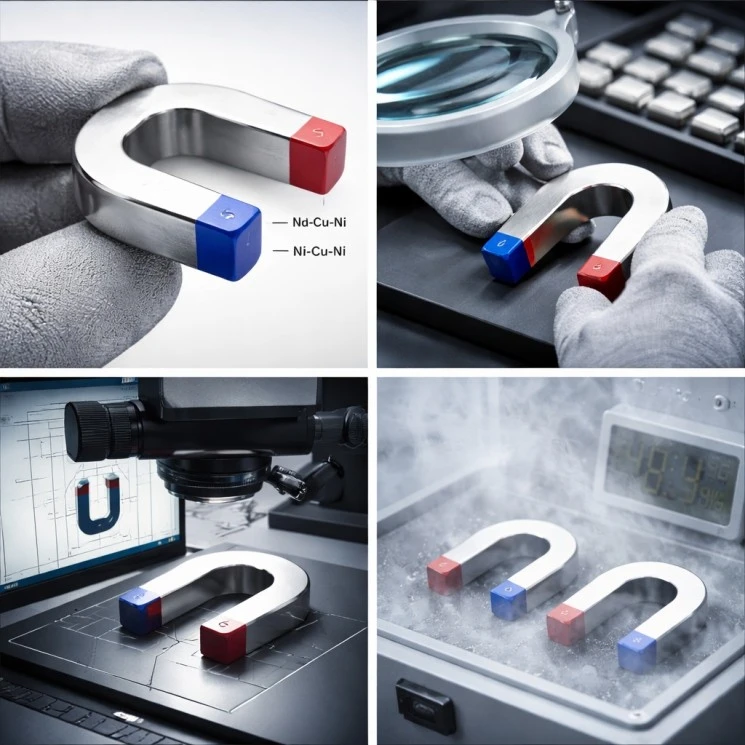
Nickel-copper-nickel (Ni-Cu-Ni) is a commonly used coating for general applications. Other treatments may be considered when the product has different appearance, environmental, or assembly requirements.
However, no single coating is suitable for every working environment. Buyers should consider humidity, chemical exposure, temperature, and possible contact with surrounding components.
For example, a magnet installed inside a dry electronic housing may have different protection requirements from one used in equipment exposed to moisture. Corrosion-resistant neodymium rare earth magnets should therefore be specified according to the actual environment rather than the coating name alone.
Information Needed for a Custom Magnet Project
Before requesting a quotation, buyers should prepare the available technical information. Clear specifications help the supplier understand the product requirements and assess suitable magnet options.
|
Project Information |
Details to Provide |
|
Magnet drawing |
Shape, dimensions, and special structural features |
|
Magnetic properties |
Required grade or magnetic performance |
|
Operating conditions |
Normal and maximum working temperatures |
|
Magnetization |
Pole arrangement and magnetization direction |
|
Surface treatment |
Preferred coating and environmental requirements |
|
Order quantity |
Sample, prototype, or production quantity |
|
Application |
Installation position and intended magnetic function |
A 2D drawing, 3D model, or physical sample can help clarify the requirements. If some technical details have not yet been finalized, buyers can start with the product structure and explain what the magnet needs to do.
This gives the engineering team a clearer basis for discussing dimensions, magnetic properties, and possible design adjustments.
Developing Magnets for Your Product Requirements
Selecting the right magnet depends on how it will be used in the finished product. Factors such as magnetic force, available installation space, operating temperature, and environmental conditions all need to be considered.
If standard sizes or grades do not meet your design requirements, custom neodymium rare earth magnets offer more options in terms of dimensions, magnetic properties, and magnetization direction.
Jinconn provides custom NdFeB magnets and magnetic assemblies based on customer drawings, samples, and application requirements. Contact our team to discuss your project and find a suitable specification for your product.