Hey there! As a supplier of Zn Coated Tile Magnets, I often get asked a really interesting question: Can Zn coated tile magnets be magnetized further? Today, I'm gonna dive deep into this topic and share some scientific facts, personal insights, and practical experiences with you all.
Key Takeaways
| 🧲 Coercivity determines magnetizability | High-coercivity materials resist changes to their magnetic state, making further magnetization difficult. |
| 🔬 Saturation magnetization is the upper limit | Every magnet has a maximum magnetic field it can reach-once saturated, no additional magnetization is possible. |
| 🛡️ Zinc coating has minimal direct effect | The coating protects against corrosion but does not significantly affect the magnetization process itself. |
| 📐 Coating thickness may matter | A very thick coating could slightly reduce the effectiveness of an external magnetizing field. |
| ✅ Initial magnetization quality matters | Properly magnetized magnets leave little room for improvement; poorly magnetized ones may show some gain. |
Understanding Zn Coated Tile Magnets
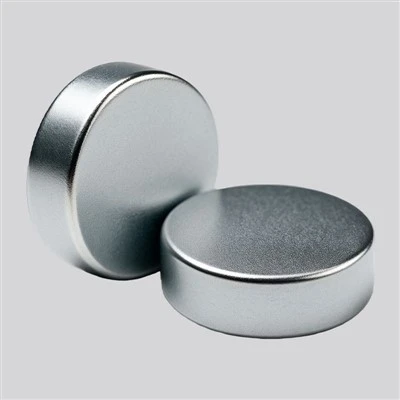
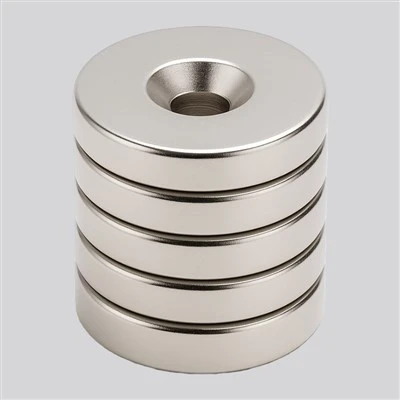
Zn coated tile magnets are permanent magnets with a zinc coating applied to improve corrosion resistance. The zinc layer protects the magnet from moisture and chemicals, making it suitable for use in environments where uncoated magnets would degrade. The tile shape provides a flat, rectangular form that works well in various industrial and commercial applications.
Can They Be Magnetized Further?
The short answer is: it depends. Several factors influence whether additional magnetization is possible.
Coercivity of the Material
Magnets are made from materials with different coercivity levels. Coercivity is the material's resistance to changes in its magnetic state.
High coercivity materials (such as those used in High Coercive Force Tile Magnets) strongly resist changes to their magnetization. Once magnetized, they tend to stay that way. Attempting to magnetize them further would require an extremely strong external magnetic field, and even then, the gain may be minimal.
Lower coercivity materials offer more potential for increased magnetization. However, even in these cases, there is a limit.
Saturation Magnetization
Every magnet has a maximum magnetic field it can reach, known as saturation magnetization. Once the magnet reaches this point, no amount of additional magnetizing force will increase its strength further. If a magnet was already magnetized close to saturation during production, there is little room for improvement.
Quality of Initial Magnetization
If a magnet was not magnetized to its full potential during production, there may be some room for improvement. However, magnets produced under precise conditions-such as High Quality Tile Magnets-are typically magnetized to near saturation, leaving little to gain.

Does the Zinc Coating Affect Magnetization?
The zinc coating itself does not directly affect the magnetization process. It is a protective layer on the outside of the magnet and does not alter the magnetic properties of the underlying material.
However, the coating can have some indirect effects:
Coating thickness: A very thick coating might slightly reduce the effectiveness of an external magnetizing field by creating a small physical barrier. A thinner, more uniform coating is generally preferable if further magnetization is planned.
Coating uniformity: Uneven coating may affect how the external field interacts with the magnet surface, though this effect is usually minor.
Comparing Coating Types
| Coating Type | Corrosion Resistance | Effect on Magnetization |
|---|---|---|
| Zinc | Good | Minimal direct effect; very thick coatings may slightly reduce field penetration |
| Nickel | Good | Similar to zinc; no significant effect on magnetization |
| Black Epoxy | Very good | Mainly for insulation and protection; does not affect magnetization rules |
The principles of magnetization remain the same regardless of coating type-the key factor is always the magnetic material inside.
Practical Experience
Some customers have attempted to increase the magnetization of their Zn coated tile magnets for specialized industrial applications. In one case, a customer used a powerful electromagnet to try to boost the strength of our magnets. They achieved some improvement, but eventually reached the saturation point where no further gain was possible.
This outcome is typical: some increase may be achievable, but the degree of improvement depends on how close the magnet was to saturation already.
Summary
| Factor | Impact on Further Magnetization |
|---|---|
| High coercivity | Makes further magnetization difficult |
| Low coercivity | Allows some potential for increase |
| Saturation limit | Caps the maximum achievable strength |
| Initial magnetization quality | Properly magnetized magnets leave little room for improvement |
| Zinc coating | Minimal direct effect; thickness may slightly influence field penetration |
at last
While it is possible to magnetize Zn coated tile magnets further in some cases, the process is not always straightforward. The material's coercivity, the initial magnetization quality, and the saturation limit all play a role. If you are considering increasing the magnetization of your Zn coated tile magnets, it is worth conducting tests to see what results you can achieve for your specific application.
For those in need of high-quality Zn coated tile magnets or other tile magnet types, Jinconn offers a range of products with various coatings and specifications. If you have questions about magnetization, coating options, or which magnet suits your project, please reach out.
📧 Email: Info@jinconn.com
📱 Phone/WhatsApp: +86 13829120676
📍 Address: Xiaohe Industrial Zone, Daojiao Town, Dongguan City, Guangdong, China