As electronic devices and industrial equipment continue to become smaller, manufacturers need magnetic components that fit limited spaces without compromising the required magnetic performance. However, standard magnet sizes may not suit every product, especially when the internal structure or mounting position requires specific dimensions.
Small rare earth magnets are commonly used in these applications because they provide strong magnetic properties in a compact size. NdFeB magnets are particularly suitable for products where installation space is limited but sufficient magnetic force remains essential. Manufacturers can also customize dimensions, magnetic grades, coatings, and magnetization directions to match the requirements of different product designs.
Jinconn supplies custom NdFeB magnets and magnetic assemblies for applications in consumer electronics, automotive systems, industrial automation, and other manufacturing sectors.
Design Requirements for Compact Magnetic Components
In a compact product, every component needs to fit the available space. Increasing magnet size may require changes to the housing, mounting structure, or surrounding components. However, choosing a magnet that is too small may affect the required holding force, positioning accuracy, or magnetic field.
This is where compact small rare earth magnets can help. NdFeB materials provide relatively high magnetic strength compared with their size, making them suitable for products where installation space is limited.
For example, small magnets can support attachment, positioning, locking, sensing, and motion control. Their actual performance depends on more than their physical dimensions. Magnetic grade, magnetization direction, working distance, and the surrounding magnetic circuit also influence the result.
Therefore, engineers should evaluate the magnet as part of the complete product assembly rather than selecting it by size alone.
Selecting NdFeB Magnets for Specific Performance Needs
NdFeB is commonly used when a product requires strong magnetic performance in a small space. However, different applications have different magnetic requirements, so the highest available grade is not necessarily the right choice.
When selecting high-strength small rare earth magnets, engineers should consider several factors:
• Remanence (Br): Indicates the residual magnetic flux density of the material after magnetization.
• Intrinsic coercivity (Hcj): Helps evaluate the magnet's resistance to demagnetization.
• Maximum operating temperature: Determines whether the selected grade can maintain suitable performance under working conditions.
• Magnetization direction: Defines how the magnetic field is oriented within the component.
• Magnetic circuit design: Influences how the magnet performs with surrounding metal parts and other magnetic components.
For instance, a magnet used in a sensor may require a specific magnetic field at a defined distance. By comparison, a magnet used for attachment may need to meet a particular holding-force requirement.
Jinconn offers different NdFeB grades and can review magnetic specifications according to drawings, samples, or application requirements. This helps customers select a suitable material without relying on grade numbers alone.
Custom Dimensions for Different Product Designs
A standard magnet may not match the dimensions of a product's mounting position. This can lead to assembly difficulties or require additional structural changes. For OEM manufacturers, custom sizing can help avoid these problems.
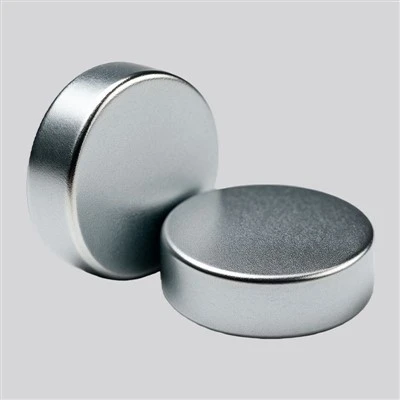
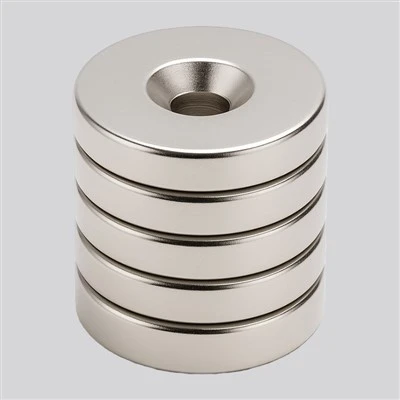
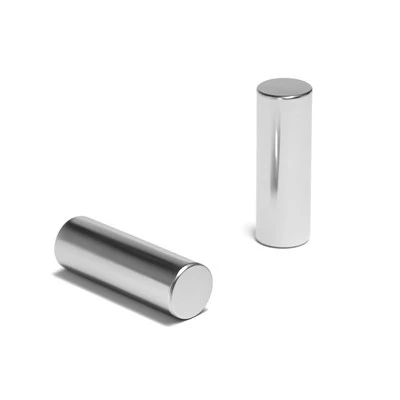
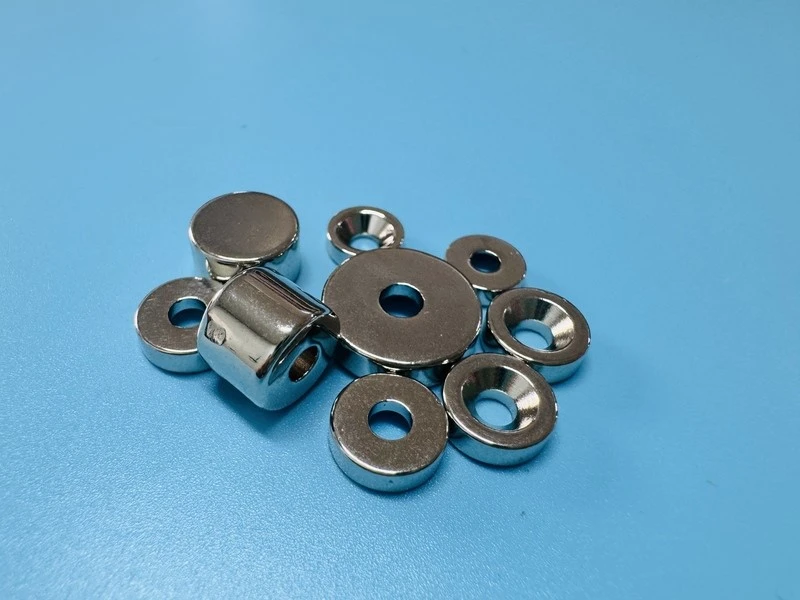
Precision small rare earth magnets can be developed in different shapes and dimensions, including discs, rings, cylinders, blocks, cubes, and other geometries. Depending on the design, manufacturers can also specify corner radii, holes, countersinks, and other machining features.
For example, Jinconn's small cube magnet specification includes an N42 NdFeB grade and dimensions of 8 × 5 × 3 mm. The listed dimensional tolerance is ±0.05 mm for length, width, and thickness. The product also has a specified operating temperature of up to 80°C, with a high-temperature version available.
These parameters apply to this particular product specification. For a new project, buyers should confirm the required dimensions, tolerances, and operating conditions against the final engineering drawing.
To make a custom quotation more accurate, customers can provide a 2D drawing, 3D model, physical sample, or basic product specifications.
Applications in Electronics, Sensors, and Industrial Equipment
Small rare earth magnets serve a range of functions across modern products. Their compact size and magnetic properties make them useful in assemblies where conventional components may take up too much space.
Common applications include:
• Consumer Electronics
Small NdFeB magnets can support attachment, positioning, and locking functions in smartphones, tablets, laptops, wearable devices, speakers, and electronic accessories. In these products, dimensions and magnetization direction often need to match the internal assembly.
• Sensors and Precision Instruments
Magnets can work with Hall-effect sensors and other magnetic sensing components to support position detection, rotation measurement, and signal control. In these applications, engineers should define the required field strength and magnet-to-sensor distance.
• Motors and Automation Systems
Compact magnets can be integrated into small motors, actuators, and automated mechanisms. Depending on the design, the magnet may require a specific shape, polarity, or magnetization pattern.
• Automotive and Smart Devices
Automotive electronics, control modules, and smart devices may use small magnets for sensing, positioning, or component attachment. Temperature, vibration, and operating conditions should be considered when selecting the material and coating.
For these applications, custom small rare earth magnets allow brands to match the magnetic component to their product structure instead of adapting the entire design around a standard magnet.
Coatings and Temperature Requirements
NdFeB magnets have good magnetic properties, but the material can corrode when exposed to moisture or unsuitable environments. As a result, surface protection plays an important role in product selection.
Common coating options include nickel, zinc, and epoxy. Each option has different characteristics, so the choice should depend on the working environment, assembly process, and expected service conditions.
For coated small rare earth magnets, buyers should consider humidity, possible contact with chemicals, surface wear, and storage conditions. A suitable coating can help protect the magnet during handling and use.
Temperature also deserves attention. If a product operates near a heat source or experiences repeated temperature changes, the selected NdFeB grade must meet the application's thermal requirements. Jinconn can discuss standard and high-temperature material options based on the expected operating conditions.
Custom Small Rare Earth Magnet Manufacturing at Jinconn
For small magnets used in compact assemblies, consistent dimensions and magnetic properties are important. Even slight variations can affect component positioning or assembly, especially when a product contains multiple magnets in a limited space.
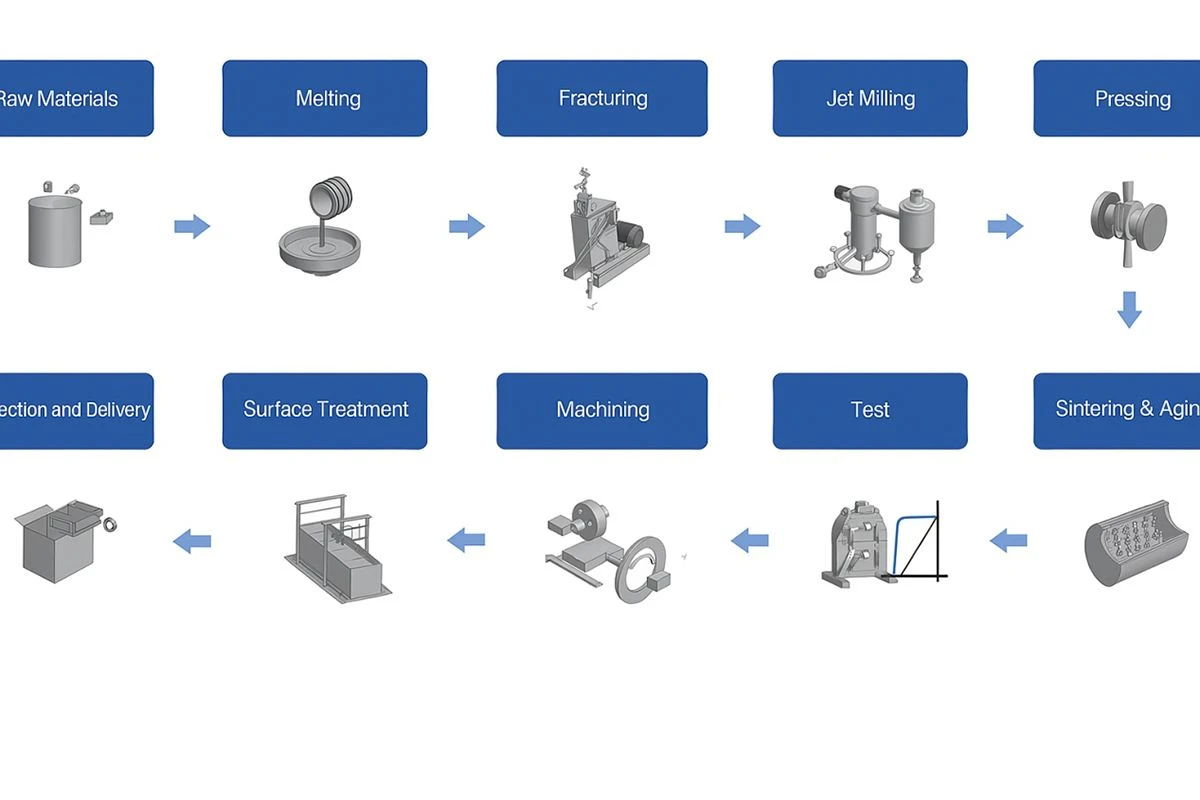
Founded in 2011, Jinconn manufactures NdFeB permanent magnets and custom magnetic assemblies. The company also provides magnetic circuit design support for projects with specific performance and structural requirements. From material selection to production and final inspection, each stage follows the relevant product specifications.
Jinconn holds ISO 9001 and ISO 14001 certifications, along with IATF 16949 certification for its automotive-related quality management requirements. These systems support consistent production and quality control across different orders.
For OEM brands and product manufacturers, Jinconn offers customization options based on drawings, samples, or application requirements, including:
• Magnet shapes and dimensions
• NdFeB grades and magnetic properties
• Dimensional tolerances
• Magnetization direction and polarity
• Surface coatings and operating temperature requirements
• Individual magnets and custom magnetic assemblies
• Packaging specifications for storage and transportation
These options allow customers to specify magnets according to their product designs and assembly conditions. Whether a project requires samples for initial testing or magnets for regular production, Jinconn can discuss the relevant specifications and supply requirements before production begins.
Contact Jinconn to discuss your small rare earth magnet requirements and request a custom quotation.