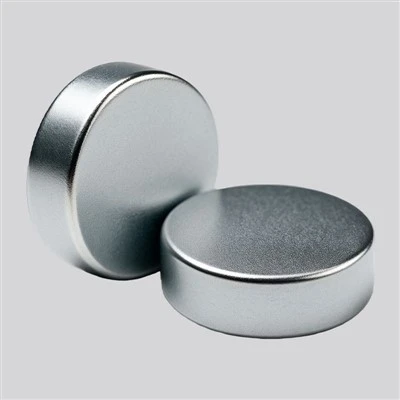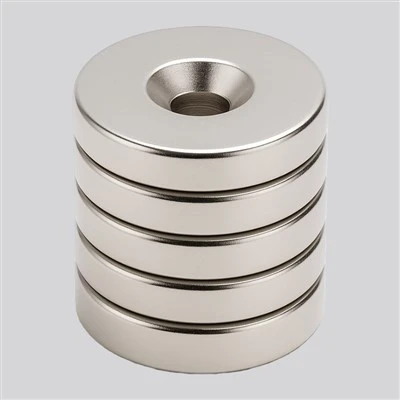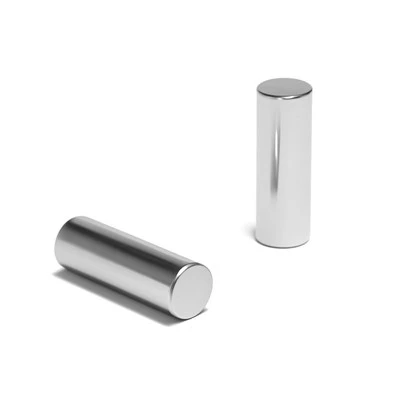
Small cube magnets are commonly used in compact products where installation space is limited and consistent magnetic force is required. They can be used for positioning, fastening, alignment, sensing, and other functions in small assemblies.
For product manufacturers, selecting the right magnet involves more than magnetic strength. Dimensions, tolerances, magnetization direction, coating, operating temperature, and batch consistency can all affect assembly and product performance. Working with an experienced small cube magnets manufacturer helps ensure these factors are considered together before production.
Key Specifications to Consider for Small Cube Magnets
A small change in magnet dimensions can affect how a magnet fits into a housing, slot, or assembly. The same applies to magnetic performance. If the force is too low, the component may not hold securely. If it is higher than necessary, it may interfere with nearby parts or make assembly more difficult.
For that reason, engineers usually need to consider the complete application rather than choose a magnet based on grade alone.
Important factors may include:
•Magnet length, width, and thickness
•Dimensional tolerance
•Magnetic grade
•Magnetization direction
•Required holding force
•Operating temperature
•Surface coating
•Expected production volume
A small cube magnets manufacturer with engineering support can review these requirements together and help define a specification that fits the actual application.
NdFeB Small Cube Magnets for Compact Assemblies
NdFeB magnets are often used in compact assemblies where space is limited but a reliable level of magnetic force is required. Their high energy density allows engineers to achieve the required magnetic performance without increasing the overall magnet size.
The cube shape also makes these magnets easy to integrate into flat surfaces, slots, and recessed pockets. This can be useful in applications where the available installation space is small or where the magnet needs to fit into a defined position.
Jinconn supplies small cube magnets made from NdFeB for industrial and custom applications. A typical specification is an 8 mm × 5 mm × 3 mm magnet in N42 grade, with a dimensional tolerance of ±0.05 mm. The standard operating temperature for this specification is up to 80°C. For applications exposed to higher temperatures, alternative material grades can be considered based on the working conditions.
These specifications are provided as a reference. The appropriate magnet size, grade, coating, and temperature rating should be selected according to the actual product design and operating environment.
Temperature and Corrosion Protection
Environmental conditions deserve the same attention as magnetic performance.
Standard NdFeB magnets work well across many applications, but heat can affect magnetic properties. When the operating temperature is higher, a suitable material grade should be selected rather than relying on a standard magnet specification.
For these projects, high temperature small cube magnets may be considered. Jinconn can also provide higher-temperature NdFeB grades for applications that require improved thermal stability.
Corrosion protection is another important consideration. If a magnet is exposed to moisture, humidity, or other corrosive conditions, the surface coating needs to match the environment.
Depending on the application, buyers may consider corrosion resistant small cube magnets with an appropriate surface treatment. Nickel coatings are commonly used, while epoxy and other options may be suitable for specific environmental or assembly requirements.
Custom Small Cube Magnets Based on Product Requirements
Many product manufacturers cannot use an off-the-shelf magnet without modification. The required size may differ from standard dimensions, or the design may require a particular coating, magnetization direction, or magnetic grade.
This is where custom small cube magnets become useful.
A reliable supplier should be able to work from engineering drawings, samples, specifications, or application requirements. The discussion should cover more than dimensions. It should also address the working environment, assembly method, target magnetic performance, and expected production quantity.
As a small cube magnets manufacturer, Jinconn supports custom requirements based on the customer's product design. This approach allows the magnet specification to be developed around the finished application instead of forcing the product to adapt to an existing catalog size.
Batch-to-Batch Consistency in Small Cube Magnets
A magnet may perform well in a prototype, but production requirements are different. For brands selling finished products, consistency from batch to batch is especially important.
Dimensional variation can affect assembly. Magnetic variation can change product performance. Coating problems can shorten service life. Therefore, quality control needs to cover the parameters that matter to the final application.
Jinconn focuses on permanent magnets and custom magnetic assemblies, with quality checks covering areas such as dimensional accuracy, magnetic performance, coating condition, and corrosion resistance. Testing can also be documented to help customers verify the agreed specifications.
For brands, this provides a clearer basis for incoming inspection and production control.
Key Details to Confirm Before Ordering
Before choosing a small cube magnets manufacturer, it helps to provide clear information about the application and the required magnet specification.
At a minimum, buyers should confirm the magnet size, dimensional tolerance, NdFeB grade, magnetization direction, coating, operating temperature, and order quantity. A 2D drawing, 3D CAD file, or sample is also useful when available, as it gives the manufacturer a clearer reference for the quotation and technical review.
The installation environment should also be considered. Where the magnet sits, how it is assembled, and what it needs to do can all affect the final specification. For example, a magnet used for positioning may require different magnetic performance from one used for fastening or sensing.
For new product development, early communication is especially helpful. The magnet may need to fit a defined cavity, work with a steel component, or maintain a specific air gap. Discussing these details before production can help avoid changes later in the project.
Custom Magnets Designed for Your Product Requirements
For brands sourcing magnetic components, the supplier choice involves more than price. Product quality, communication, production control, and the ability to handle custom specifications can all affect the final result.
Jinconn specializes in permanent magnets and custom magnet assemblies. The company works with customers on material selection, magnet specifications, production, and final inspection, with a focus on the requirements of each project.
For applications using precision small cube magnets, compact NdFeB components, or other custom magnetic parts, Jinconn can review the required dimensions, magnetic grade, coating, temperature range, and order volume before production.
Providing a drawing, sample, or detailed specification gives the engineering team a practical starting point for review and quotation. From there, the magnet can be evaluated according to how it will be used in the finished product.