When a product requires a compact magnet for holding, positioning, sensing, or motion, a standard magnet may not fit the design requirements. The diameter may be too large for the available space, the length may not match the assembly, or the tolerance may not provide the fit the application requires. Working temperature, surface coating, and magnetization direction can also affect the final result.
For OEM buyers and engineers, Custom Cylindrical Rare Earth Magnets offer more flexibility in matching the magnet to the product design. Jinconn Magnet provides custom NdFeB magnets in different sizes, grades, tolerances, coatings, and magnetization directions, based on the requirements of each project.
Why Choose Custom Cylindrical Rare Earth Magnets?
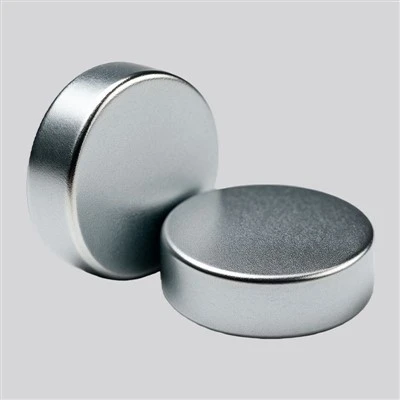
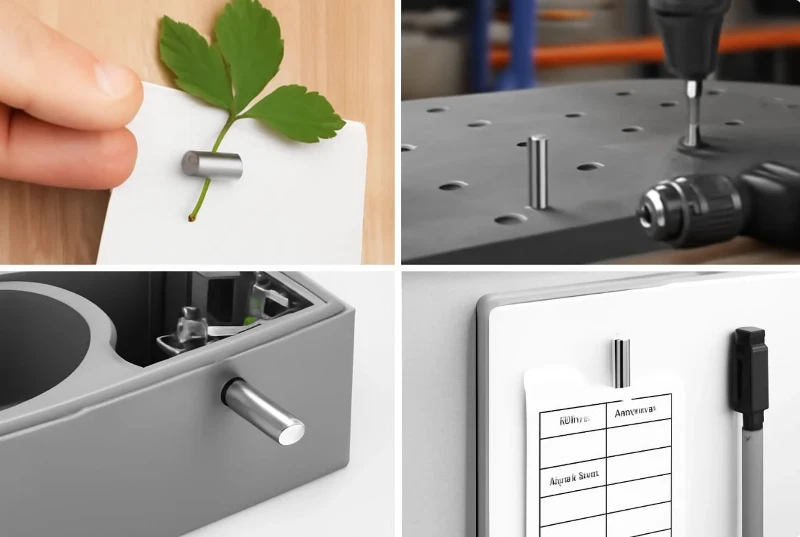
Cylindrical rare earth magnets have a simple shape and high magnetic energy density, so they work well where installation space is limited. They are commonly used in sensors, miniature motors, magnetic closures, positioning parts, electronic devices, and industrial equipment.
However, magnetic strength is only one part of the selection process. A magnet can have sufficient force and still cause problems because the diameter is incorrect, the tolerance is too loose, or the pole direction does not match the design. The working temperature and surrounding environment also matter.
Therefore, buyers often specify High-Precision Custom Cylindrical Rare Earth Magnets when the magnet needs to fit a defined cavity or interact with other precision components. Defining the requirements early can also reduce design changes during production.
Key Specifications to Consider
Size and Tolerance
Diameter and length affect both mechanical fit and magnetic performance. In compact assemblies, even a small dimensional difference can affect installation or positioning.
Jinconn works from customer drawings, samples, specifications, or application requirements. This allows the magnet to follow the product design instead of forcing the design to use a standard catalog size.
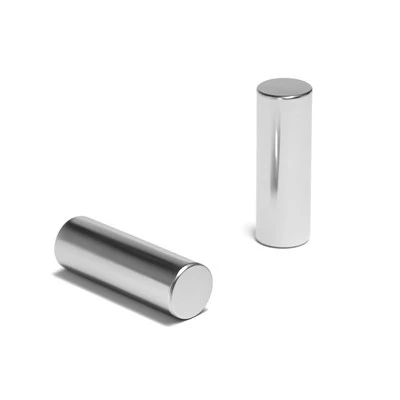
One Jinconn cylindrical NdFeB example uses N35 material, D5×20 mm dimensions, and a ±0.05 mm tolerance. The final specification depends on the application.
Magnetic Grade and Temperature
Different applications need different magnetic properties. Standard NdFeB grades suit many products, while high-temperature designs may require better thermal stability.
High-Temperature Custom Cylindrical Rare Earth Magnets can be considered for motors, sensors, actuators, and equipment exposed to higher temperatures. Buyers should look at Br, Hcj, and the actual operating temperature rather than selecting a grade based only on its name.
For reference, Jinconn's N35 example lists Br ≥11.8 kGs, Hcj ≥12 kOe, a surface magnetic field of 4,300 Gs, and magnetic flux of 2.0 mWb. The standard example lists an operating temperature of up to 80°C, while higher-temperature versions are available for different requirements.
Magnetization Direction
The magnetization direction must match the way the magnet works with nearby components. Axial magnetization is common for cylindrical magnets, but other directions may suit specific sensing or positioning designs.
For this reason, buyers should confirm the pole orientation on the drawing before production. Clear specifications help reduce assembly errors and unnecessary rework.
Coating and Surface Protection
NdFeB magnets often need surface protection, particularly in humid or demanding environments. Depending on the application, buyers may consider nickel-based, epoxy, or other suitable coatings.
Corrosion-Resistant Cylindrical Rare Earth Magnets can support applications where surface protection matters. Still, coating selection should take temperature, humidity, chemical exposure, assembly conditions, and expected service life into account.
Common OEM Applications
The cylindrical form works across many product types. In consumer electronics, magnets can support sensing, alignment, attachment, and compact mechanisms. In industrial equipment, they can be used in sensors, actuators, fixtures, and automation components.
Small Custom Cylindrical Rare Earth Magnets are useful when installation space is tight. Meanwhile, High-Strength Custom Cylindrical Rare Earth Magnets can meet applications that need greater holding or positioning force within a defined space.
Since application requirements differ, the same size and grade will not suit every project. A custom specification gives engineers more room to balance magnetic performance, fit, and production requirements.
What Should Buyers Confirm Before Ordering?
Before requesting a quotation, buyers should confirm the diameter, length, tolerance, magnetic grade, target performance, magnetization direction, operating temperature, coating, quantity, and packaging requirements.
It also helps to provide a drawing, sample, or a brief description of how the magnet will be installed. With this information, the manufacturer can better understand the application and review the specification before production.
Working with Jinconn on Custom Magnet Requirements
Jinconn Magnet has focused on permanent magnets and custom magnet assemblies since 2011. With around 15 years of industry experience, the company supports projects from technical discussion and material selection through production, inspection, packaging, and delivery.
The engineering and quality teams review key requirements throughout the process. Depending on the project, inspection can cover dimensions, appearance, magnetic performance, coating condition, and batch consistency. For shipping, Jinconn can use magnetic isolation or demagnetization when required, while protective spacers help reduce scratches, chipping, and coating damage.
Jinconn holds ISO 9001 and ISO 14001 certifications and supplies custom magnetic solutions for automotive systems, consumer electronics, industrial automation, renewable energy, and other applications.
For brands, a custom magnet supplier needs to do more than provide a standard product. The supplier should understand the application, communicate clearly about specifications, and support consistent production as the project develops.
Custom Magnets for Your Product Requirements
Choosing a cylindrical NdFeB magnet involves more than selecting a magnetic grade. Diameter, length, tolerance, magnetization direction, operating temperature, and coating all need to match the product and its working environment. These details can affect installation, magnetic performance, and long-term use.
With Custom Cylindrical Rare Earth Magnets, brands can specify the magnet based on their actual product requirements. Jinconn Magnet works with technical drawings, samples, and specifications to review the required dimensions and magnetic properties, supporting projects from initial prototypes through regular production.
Providing complete specifications at the beginning can make communication and quotation more straightforward. It also gives both sides a clearer basis for sample development, testing, and subsequent production.