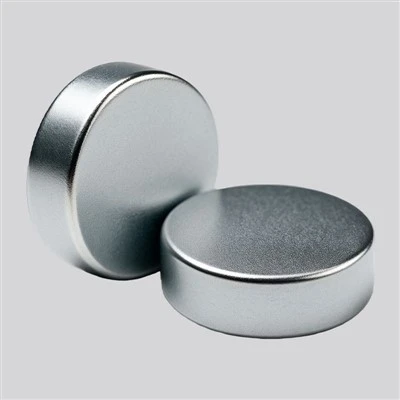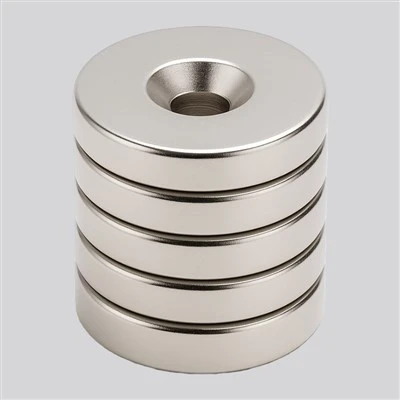
Ferrite ring magnets appear regularly in motors, sensors, and holding devices. Their performance, however, depends largely on dimensional design. Understanding how inner diameter, outer diameter, and thickness interact helps engineers and procurement teams choose the right magnet for a given application.
Key Takeaways
| 📏 Dimensions define magnetic flux | Outer diameter, inner diameter, and thickness directly affect surface magnetic field strength and holding force. |
| 🔄 Geometry shapes the magnetic circuit | Ring dimensions determine flux distribution, air gap, and how effectively the magnet couples with surrounding components. |
| ⚙️ Tolerances matter for assembly | Tight dimensional control ensures consistent performance and reliable integration into motor or sensor assemblies. |
| 🎯 Application requirements drive design | The right combination of OD, ID, and thickness depends on operating temperature, space constraints, and magnetic field requirements. |
Why Ferrite Ring Magnet Dimensions Matter
A ferrite ring magnet is defined by three key dimensions: outer diameter (OD) , inner diameter (ID) , and thickness (or height) . These parameters determine not only the physical fit of the magnet but also its magnetic performance characteristics.
For engineers and procurement professionals, specifying the correct ring magnet dimensions is essential. An oversized OD may not fit the housing. An undersized ID may not accommodate the shaft. Incorrect thickness may result in insufficient magnetic force or excessive material cost.
The relationship between these dimensions and magnetic performance is not always straightforward. Here is how each dimension affects a ferrite ring magnet in practice.
Outer Diameter: The Primary Driver of Magnetic Strength
The outer diameter of a ferrite ring magnet directly influences the total magnetic flux available. A larger OD means more magnetic material volume, which generally translates to higher surface magnetic field strength and greater holding force.
In motor applications, a larger OD allows for a larger air gap surface, which can improve torque production and power density. The shape and size of ring magnets affect the maximum energy product and overall efficiency of brushless DC motors.
Increasing the OD, however, also increases material cost and may require a larger housing. In space-constrained applications such as automotive sensors or compact actuators, the OD must be balanced against packaging limitations.
Practical consideration: When specifying OD, consider the available space in the assembly and the required magnetic force. A larger OD provides more magnetic output but adds weight and cost.
Inner Diameter: The Critical Clearance Factor
The inner diameter of a ferrite ring magnet determines the clearance for shafts, axles, or other components that pass through the center of the ring. A larger ID may be necessary to accommodate a thicker shaft or to provide clearance for assembly.
Increasing the ID, however, reduces the cross-sectional area of the magnet, which can lower magnetic flux output. For a fixed OD, a larger ID means less material available to generate magnetic field, which can reduce surface magnetic flux density and holding force.
In motor designs, the ID also affects the air gap between the rotor and stator. A smaller ID can improve magnetic coupling but may create assembly difficulties. Some designs use a custom ferrite ring magnet with a specific ID-to-OD ratio to achieve the desired magnetic performance while meeting mechanical requirements.
Practical consideration: Determine the minimum ID required for the shaft or assembly clearance, then specify the smallest practical ID to maximize magnetic material volume.
Thickness: Balancing Magnetization and Mechanical Strength
Thickness (or axial height) affects the total magnetic volume and the magnet's resistance to demagnetization. A thicker ferrite ring magnet generally provides stronger magnetic force and better stability under opposing magnetic fields.
Thicker magnets also have higher intrinsic coercivity margins, which is particularly important in applications with high temperatures or fluctuating loads. Adequate coercivity margin is critical for preventing irreversible performance loss in demanding motor applications.
Thicker magnets, however, are more expensive and may be more difficult to magnetize uniformly. The magnetization direction also affects the relationship between thickness and performance. For axially magnetized rings, thickness directly contributes to magnetic flux. For radially magnetized rings, the relationship is more complex.
Practical consideration: Select the minimum thickness that provides the required magnetic force and thermal stability. Thicker is not always better if it adds unnecessary cost or creates manufacturing challenges.
Dimensional Tolerances: Why Precision Matters
Manufacturing tolerances for OD, ID, and thickness affect the consistency and reliability of ferrite ring magnets. Tight tolerances ensure that magnets fit precisely into assemblies and deliver consistent magnetic performance across production batches.
Typical machining tolerances for ring magnets range from ±0.02 mm to ±0.1 mm, depending on magnet size, geometry, and coating system. For precision motor and sensor applications, tighter tolerances are often required.
Dimensional variations can cause misalignment, increased vibration, or reduced magnetic coupling efficiency. In rotating applications, even small tolerance deviations can lead to imbalance and premature bearing wear.
Practical consideration: Specify tolerances based on the assembly requirements. Overly tight tolerances increase manufacturing cost, while loose tolerances may compromise performance.
Application-Specific Design Considerations
Motors and Generators
In motor applications, the OD, ID, and thickness of a ferrite ring magnet affect torque output, power density, and thermal performance. Multi-pole ring magnets are commonly used in brushless DC motors and permanent magnet synchronous motors.
Sensors
For magnetic sensors, the ring magnet dimensions affect signal strength and resolution. Hall sensors and rotary encoders require precise magnetic field distribution, which depends on the geometry of the magnet.
Holding and Mounting
In holding applications, the outer diameter and thickness determine the contact area and holding force. A larger OD provides more surface area for magnetic attraction, while greater thickness increases the magnetic flux.

How Jinconn Helps with Custom Ferrite Ring Magnet Specifications
Selecting the right ferrite ring magnet usually involves balancing several factors-magnetic performance, physical fit, cost, and lead time. At Jinconn Magnet, we work with clients to evaluate these trade-offs and arrive at a practical specification.
Our approach starts with understanding the application. We look at the operating environment, the available space, the required magnetic field strength, and any assembly constraints. Based on that, we recommend a combination of OD, ID, thickness, and material grade that fits the intended use.
We can supply custom dimensions with tolerances down to ±0.02 mm, depending on the size and complexity of the part. Magnetization patterns include axial, radial, and multi-pole configurations. We also offer a range of coating options for applications that require additional environmental protection.
Our ISO 9001 and IATF 16949 certifications reflect our commitment to consistent quality. Production batches are inspected and tested to ensure they meet the agreed specifications before shipment.
Whether you need a standard size or a fully custom design, we provide engineering support from the initial inquiry through to production. The goal is to deliver a magnet that works reliably in your application, without unnecessary complexity or cost.
FAQ
Q1: How do I determine the correct OD for my motor application?
The OD should be selected based on available space and required magnetic force. A larger OD provides more magnetic output but may not fit the housing.
Q2: What is the relationship between ID and shaft clearance?
The ID must be larger than the shaft diameter to allow for assembly. However, a larger ID reduces magnetic material volume and may lower performance.
Q3: How does thickness affect temperature stability?
Thicker magnets generally have better thermal stability because they have more material to resist demagnetization. Material grade also plays a key role.
Q4: What tolerances can Jinconn achieve?
Jinconn can achieve tolerances of ±0.02 mm for precision applications, depending on magnet size and geometry.
Q5: Can Jinconn manufacture multi-pole ring magnets?
Yes, Jinconn supports multi-pole magnetization patterns for motor and sensor applications.
Q6: What coating options are available for ferrite ring magnets?
Ferrite magnets are naturally corrosion-resistant, but Jinconn can provide protective coatings for additional durability in harsh environments.
Ready to Specify Your Ferrite Ring Magnet?
Jinconn Magnet offers custom ferrite ring magnets with precise OD, ID, and thickness control. Contact us to discuss your dimensional requirements and application needs.
📧 Email: Info@jinconn.com
📱 Phone/WhatsApp: +86 13829120676
📍 Address: Xiaohe Industrial Zone, Daojiao Town, Dongguan City, Guangdong, China