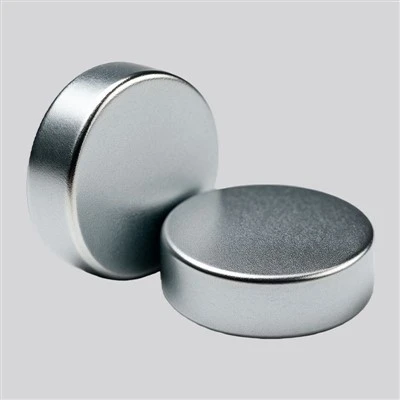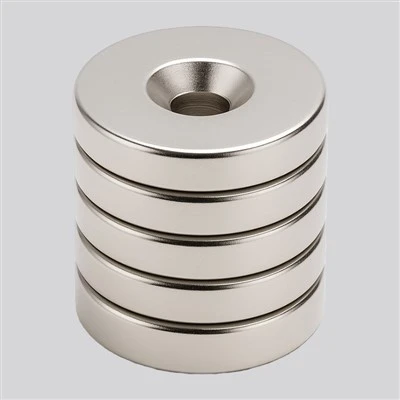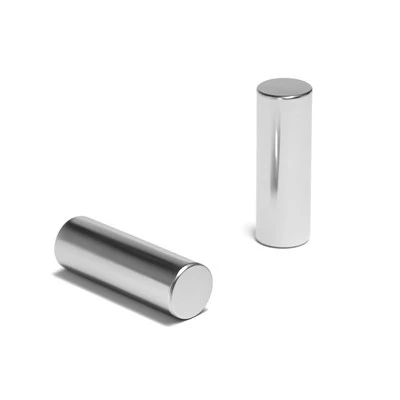
Cylindrical neodymium magnets are used in a range of products, including motors, sensors, electronic devices, and industrial fixtures. Although the shape looks simple, the specifications can vary considerably from one application to another. Diameter, length, magnetic grade, magnetization direction, and surface coating all affect how a magnet fits and performs in the finished product.
For manufacturers developing a new component, standard magnet sizes may not always be suitable. Custom Nickel Plating Cylindrical Magnets provide more flexibility, allowing the dimensions and magnetic properties to match the actual design. However, selecting the right specification requires attention to more than magnetic strength alone.
What to Consider When Choosing a Cylindrical Magnet
A cylindrical magnet needs to fit its installation space while providing the required magnetic field. These two requirements are closely related, but they are not always easy to balance.
For example, a magnet used in a small motor may need to fit around a shaft or inside a housing. In a sensor assembly, the distance between the magnet and the sensing element can affect the detection result. A magnet with the wrong dimensions or magnetic orientation may therefore require changes to the surrounding structure.
Before requesting a quotation, it helps to establish a few basic details:
• Dimensions: Diameter and length, including any required tolerances.
• Magnetic grade: Selected according to the required magnetic performance and working conditions.
• Magnetization direction: Axial, diametrical, or another arrangement specified by the design.
• Surface coating: Nickel plating or another treatment suited to the operating environment.
• Operating temperature: The expected temperature during normal use and any temporary temperature peaks.
• Installation method: Whether the magnet will be inserted, bonded, press-fitted, or used in an assembly.
Providing this information at the beginning gives the supplier a clearer understanding of the application and reduces unnecessary specification changes later.
Nickel Plating and Its Role in Magnet Protection
NdFeB magnets offer strong magnetic properties, but the material can corrode when exposed to moisture or unsuitable environments. A surface coating helps protect the magnet and maintain its surface condition during use.
Nickel plating is a common choice for cylindrical neodymium magnets. Its metallic finish is suitable for many electronic and industrial components, while the coating provides a protective barrier between the magnet and its surroundings.
However, nickel plating does not make an NdFeB magnet completely resistant to corrosion. Its suitability depends on the coating quality and the conditions in which the magnet operates. Applications involving prolonged moisture exposure, chemicals, or corrosive substances may require additional evaluation.
For this reason, buyers should describe the actual working environment rather than simply request a corrosion-resistant coating. This allows the coating specification to be considered alongside the magnet's dimensions and intended service conditions.
N35 Cylindrical Magnet: A Reference for Technical Evaluation
Magnetic grade is one of the first specifications buyers consider. Nevertheless, a higher grade does not necessarily mean a better choice for every application. The required magnetic performance depends on the magnet's size, working distance, magnetization direction, and surrounding structure.
Jinconn's reference nickel-plated cylindrical magnet uses N35 NdFeB material. Its listed specifications are as follows:
|
Parameter |
Specification |
|
Magnet Grade |
N35 |
|
Dimensions |
D18 × 30 mm |
|
Remanence (Br) |
≥11.8 kGs |
|
Intrinsic Coercivity (Hcj) |
≥12 kOe |
|
Dimensional Tolerance |
±0.05 mm |
|
Operating Temperature |
≤80°C |
|
Density |
≥7.5 g/cm³ |
|
Surface Magnetic Field |
3,300 Gs |
|
Magnetic Flux |
2.0 mWb |
The surface magnetic field and magnetic flux values refer to this particular reference model. Actual readings can vary with magnetization direction, measurement position, and testing conditions.
If the reference specifications do not match the application, buyers can discuss other dimensions or magnetic grades. High-temperature versions can also be considered when the standard operating temperature is insufficient. The final selection should take both the required magnetic performance and operating conditions into account.
Getting the Dimensions Right for Proper Assembly
A magnet can meet its magnetic requirements and still cause problems if its dimensions do not match the installation structure.
Consider a cylindrical magnet fitted into a metal housing. If its diameter is too large, assembly may become difficult or the surrounding component may be damaged. If it is too small, the magnet may move unless the design provides an appropriate fixing method.
The same applies to magnet length. In compact assemblies, even a small difference can change the clearance between components or the magnet's position relative to a sensor.
Jinconn's reference model specifies a dimensional tolerance of ±0.05 mm. For other precision custom nickel plating cylindrical magnets, the achievable tolerance depends on the dimensions, machining process, and part geometry.
It is usually better to identify critical dimensions on the technical drawing instead of applying tight tolerances to every measurement. This gives the manufacturer a clearer processing target and helps avoid unnecessary machining requirements.
Supporting Low-Volume and Special-Specification Orders
Product development often begins with a small batch. A brand may need several samples to test a new design, while an equipment manufacturer may require a limited quantity for a specialized component. These orders may not fit the purchasing requirements of suppliers focused mainly on standard, high-volume products.
Jinconn accepts custom magnet projects with flexible order quantities. Customers can discuss the MOQ according to the magnet's material, dimensions, coating, and production requirements. This is particularly useful when a project involves non-standard specifications or an initial trial order.
For suitable projects, Jinconn also provides design support and free samples. Customers can review the proposed dimensions and magnetic specifications before proceeding with a production order. Sample arrangements, quantities, and shipping costs can be confirmed during the initial discussion.
This approach allows brands to evaluate a magnet before committing to a larger quantity. It also gives both sides an opportunity to identify design or assembly issues at an earlier stage.
How a Custom Magnet Order Moves Through Production
A custom order usually starts with a drawing, sample, or description of the intended application. Customers do not need to have every technical detail finalized before making an inquiry. Basic information can provide a starting point for the initial review.
The process generally includes the following stages:
1. Requirement and Drawing Review
Jinconn reviews the application, dimensions, estimated quantity, and technical requirements. If the customer provides a sample rather than a drawing, its main dimensions and intended function can be discussed first.
2. Specification Confirmation
The magnet grade, dimensions, tolerance, nickel coating, and magnetization direction are checked. If the proposed design needs adjustment, the engineering team can discuss possible changes with the customer.
3. Sample Preparation
For projects requiring sample approval, the agreed specifications are used to prepare the initial batch. Customers can then check the fit, appearance, and magnetic performance.
4. Manufacturing and Inspection
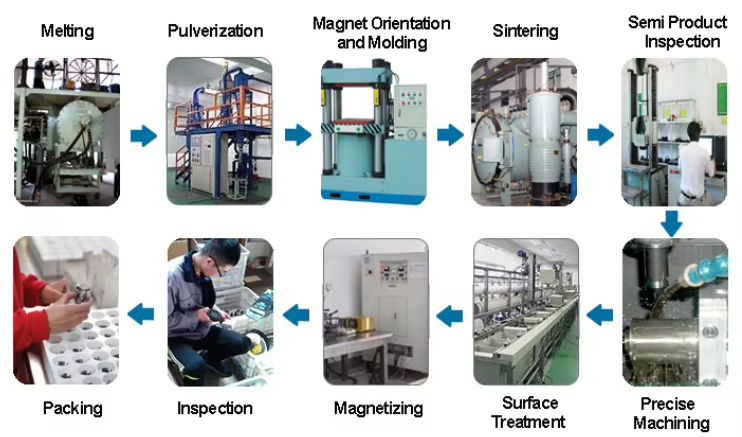
Once the specifications are confirmed, production proceeds through material preparation, alloy processing, powder pressing, sintering, machining, nickel plating, and magnetization. Inspection focuses on the dimensions, surface condition, and magnetic requirements agreed for the order.
5. Packaging and Shipment
Before shipment, magnets undergo visual and quantity checks. Individual wrapping or custom trays can help prevent contact damage, while cushioning materials reduce movement during transportation. Packaging arrangements are selected according to the product and shipping requirements.
For suitable projects, Jinconn targets a design-to-delivery period of around 30 days. The actual lead time depends on product complexity, sample approval, order quantity, and transportation arrangements.
A Magnet Supplier That Understands Different Order Requirements
Founded in 2011, Jinconn focuses on permanent magnets and custom magnetic assemblies. Its products serve customers in automotive systems, consumer electronics, industrial automation, renewable energy, and other manufacturing sectors.
The company's work covers more than standard magnet supply. Customers can discuss changes to dimensions, magnetic grades, tolerances, coatings, and magnetization directions according to their product designs.
For brands with smaller or less common requirements, this flexibility can make the sourcing process more straightforward. Instead of adapting a product around an available standard magnet, customers can discuss a specification that better fits the intended application.
Throughout the order, clear communication remains important. Jinconn works with customers from the initial requirement review through design confirmation, sampling, production, inspection, and delivery. After-sales communication is also available when customers need to discuss product or order-related questions.