Selecting a reliable magnet bar supplier involves more than comparing prices. For procurement teams, the main challenge is finding a manufacturer that delivers consistent magnetic strength, accurate dimensions, durable coatings, and dependable lead times. The following criteria can help you assess a custom magnet bar manufacturer and make a more informed sourcing decision.
Key Takeaways
| 🧲 Material grade matters | Magnet grade (N35–N54) directly determines magnetic strength and temperature stability. |
| 📏 Tolerances affect performance | Dimensional precision (down to ±0.05mm) is critical for assembly fit and consistency. |
| 🛡️ Coating protects against corrosion | Ni-Cu-Ni, epoxy, or gold coatings prevent degradation in humid or harsh environments. |
| 🔬 Quality control ensures batch consistency | In-house testing (gauss meters, salt spray, fluxmeters) is a must. |
| ⏱️ Lead time impacts project schedules | 7–15 days for prototypes and 15–20 days for bulk orders are industry benchmarks. |
Why the Right Magnet Bar Supplier Matters
Magnet bars are essential components in industries ranging from food processing and pharmaceuticals to automotive and electronics. They remove ferrous contaminants from free-flowing materials, protect equipment, and ensure product purity . However, not all magnet bar manufacturers deliver the same quality.
A substandard magnetic bar can fail in the field. For instance, some low-cost suppliers fill magnet tubes with steel washers or ferrite magnets instead of high-grade neodymium, drastically reducing magnetic strength and effectiveness . Others use thinner stainless steel tubes that compromise durability. These issues can lead to equipment damage, product contamination, and costly downtime.
That is why evaluating a magnet bar supplier on multiple dimensions-not just price-is essential for long-term reliability.
Key Evaluation Criteria for a Magnet Bar Supplier
When assessing potential suppliers, consider the following factors. Each one directly impacts product performance and your overall procurement outcome.
1. Material Quality and Grade Selection
The core of any magnet bar is the neodymium (NdFeB) magnet inside. The grade-such as N35, N42, or N54-determines the maximum energy product and the magnetic strength of the bar .
| Magnet Grade | Typical Application |
|---|---|
| N35–N42 | General industrial use |
| N45–N48 | High-performance motors and sensors |
| N50–N54 | High-strength, compact applications |
What to ask a potential supplier:
What magnet grades do you offer?
Can you provide material test reports and grade verification?
Do you use 100% neodymium magnets or substitute lower-cost materials?
2. Temperature Stability
Temperature significantly affects magnet performance. Standard NdFeB magnets operate up to 80°C, but higher-temperature grades with suffixes like M, H, SH, UH, and EH are available for demanding environments .
Key question: Does the supplier offer temperature-rated grades that match your operating conditions?
3. Dimensional Tolerance and Precision
Magnet bars must fit precisely into assemblies. Standard tolerances of ±0.05mm are typical for industrial applications . For applications requiring tighter control, a custom magnet bar supplier should offer tighter tolerances upon request.
What to check:
What dimensional tolerance does the supplier guarantee?
What measuring equipment do they use (CMM, micrometers, gauges)?
4. Surface Coating and Corrosion Resistance
Coatings protect the magnet from corrosion. Common options include:
| Coating Type | Best Use Case |
|---|---|
| Ni-Cu-Ni (nickel-copper-nickel) | Standard indoor applications |
| Epoxy | Harsh or chemically aggressive environments |
| Gold/Silver plating | Specialized high-conductivity or corrosion-critical applications |
| Stainless steel tube (304/316L) | Food processing, pharmaceutical, and wet environments |
Critical point: A magnet bar manufacturer should offer coating options that match your specific environment. Some suppliers claim to be waterproof , but the real question is whether the coating withstands your actual conditions-humidity, temperature cycling, salt exposure, and chemicals.
5. Quality Control and Testing
Reliable magnet bar suppliers have in-house testing capabilities. These typically include:
Gauss meters for surface magnetic field measurement
Fluxmeters for total magnetic flux testing
Salt spray testing for corrosion resistance
Dimensional inspection systems
Why this matters: "Quality is built into every step of our NdFeB magnet production process, not inspected at the end" . Consistent testing ensures batch-to-batch reliability.
6. Customization and Engineering Support
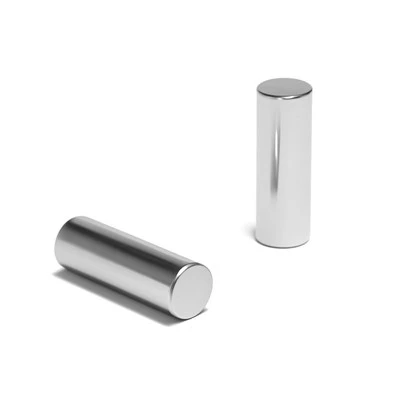
For many industrial applications, standard magnet bars do not suffice. A custom magnet bar may require:
Specific lengths, diameters, or square shapes
Custom end fittings (nail head, threaded holes, eye bolts)
Specific magnetization direction
Unique coatings
What to look for: A custom magnet bar manufacturer should offer engineering support from the early design stage. This includes design reviews, prototyping, and technical consultation to optimize your magnet solution.
7. Lead Time and Supply Stability
Lead time is a critical procurement factor. Industry benchmarks are:
Prototype samples: 7–15 working days
Bulk orders: 15–25 working days after sample approval
Also assess the supplier's capacity for long-term supply agreements and their track record of on-time delivery.
Supplier Comparison: What to Look For
| Evaluation Factor | What a Good Supplier Offers | What to Avoid |
|---|---|---|
| Material | 100% high-grade NdFeB magnets | Steel washers or ferrite substitutes |
| Coating | Ni-Cu-Ni, epoxy, or custom options with testing data | Generic coatings without corrosion test results |
| Tolerance | ±0.05mm or tighter | Wide tolerances that cause fit issues |
| Testing | In-house gauss meters, fluxmeters, salt spray | No in-house testing; relies on supplier claims |
| Certification | ISO 9001, IATF 16949, REACH, RoHS | No certifications or unclear compliance |
| Lead Time | 7–15 days for samples; reliable bulk timelines | Unrealistic promises or frequent delays |
| Engineering Support | Design consultation, prototyping, and documentation | No engineering involvement |
How Jinconn Magnet Addresses These Criteria
Jinconn Magnet has supplied custom magnetic solutions to industrial clients since 2011, with a focus on NdFeB permanent magnets and engineered assemblies.
Material and Grade Selection
Jinconn offers a broad range of NdFeB grades, from N35 to N54, including temperature-stabilized variants with M, H, SH, UH, and EH ratings. We source materials from established supply chains with documented traceability.
Precision Manufacturing and Tolerances
Our manufacturing capabilities include precision grinding and CNC machining, allowing us to hold dimensional tolerances to ±0.05mm where required. This level of control supports consistent assembly fit and magnetic circuit performance.
Custom Coating Solutions
We provide several coating systems: nickel-copper-nickel, epoxy, gold, and silver plating. Coating specifications-including thickness and material-can be adjusted to match the operating environment and application demands.
Quality Assurance
Jinconn maintains quality controls throughout production, supported by ISO 9001 and IATF 16949 certifications. Our in-process inspections cover material composition, magnetic flux, dimensional accuracy, and salt spray resistance.
Engineering Support
Our engineering team is available from the early design phase. We work with customers to review magnet grade, geometry, magnetization direction, coating options, and assembly requirements before production begins. Prototype samples are typically delivered within 7 to 15 working days to support design validation.
One-Stop Service
Jinconn provides an integrated service covering material selection, manufacturing, inspection, and delivery. This approach reduces the number of suppliers a customer needs to manage and helps maintain consistent quality across production runs.

Frequently Asked Questions
Q1: What is the typical lead time for custom magnet bars?
Prototypes usually ship within 7–15 working days. Bulk orders typically take 15–20 days after sample approval.
Q2: How do I specify my magnet bar requirements?
Provide dimensions (diameter, length), required magnetic grade, operating temperature, coating preference, and any end fittings needed. A drawing is helpful.
Q3: What MOQ do you support?
Jinconn supports flexible MOQs, from prototype quantities to large-volume production.
Q4: Can you produce magnet bars with stainless steel tubes?
Yes. Jinconn offers stainless steel tube housings (304 and 316L) for food-grade, pharmaceutical, and wet applications.
Q5: How do you ensure quality consistency across batches?
Through stable raw material sourcing, fixed production routes, and ongoing statistical monitoring. Every batch is tested and traceable.
Q6: What certifications do you hold?
Jinconn is ISO 9001 and IATF 16949 certified, with processes compliant with REACH and RoHS.
Ready to Evaluate Jinconn as Your Magnet Bar Supplier?
Bringing a custom magnetic solution to production requires a partner with the right expertise, capabilities, and commitment to quality. Jinconn Magnet combines 15 years of experience with flexible manufacturing, engineering support, and ISO-certified quality management.
📧 Email: Info@jinconn.com
📱 Phone/WhatsApp: +86 13829120676
📍 Address: Xiaohe Industrial Zone, Daojiao Town, Dongguan City, Guangdong, China