In modern automation systems, pairing permanent magnets with magnetic sensors has become a common approach for achieving precise position feedback, motion control, and non-contact detection. This combination offers clear advantages over optical or mechanical alternatives, particularly in environments where dust, moisture, or vibration would compromise other sensing methods. Understanding how these components work together helps manufacturers choose the right magnetic solution for their specific automation requirements.
How Magnet-Sensor Integration Works
Magnetic sensors detect changes in magnetic field strength or direction as a magnet moves relative to the sensor. Hall effect sensors, for example, measure variations in magnetic flux density and convert these into electrical signals that indicate position, speed, or direction of movement. When a permanent magnet attaches to a moving component-such as a motor shaft, robotic joint, or linear actuator-the sensor continuously tracks its position without any physical contact.
This non-contact nature provides a significant benefit. Since no mechanical wear occurs between the sensing element and the moving part, these systems maintain accuracy over long service lives. Furthermore, magnetic sensing performs reliably in harsh conditions where dust, oil, or temperature extremes would interfere with optical encoders. As automation systems increasingly demand higher precision and faster response times, the role of a dependable magnetic sensor magnet becomes more important.
Common Applications in Automation
The integration of magnets and sensors appears across many automation applications. In robotic arms, magnetic position sensors provide real-time feedback on joint angles, enabling precise motion control and coordinated multi-axis movement. Electric motors rely on magnetic encoders to monitor rotor position and speed, providing closed-loop control that optimizes performance and energy efficiency.
Linear actuators also benefit from magnet-sensor combinations. By attaching a magnet to the moving shaft and placing a sensor nearby, the system tracks extension and retraction accurately. This setup appears commonly in automated assembly lines, packaging equipment, and precision positioning stages. For applications that require multi-turn tracking-such as robotics or wind turbine pitch control-specialized sensors can count rotations without external power, storing position information even during power interruptions.

Choosing the Right Magnet for Sensor Applications
Not every magnet works equally well with every sensor. The performance of a magnetic position sensor depends on factors such as magnet strength, orientation, and stability across temperature changes. For Hall effect sensors, the magnetic field must fall within the sensor's linear operating range; too weak a field produces low signal-to-noise ratio, while too strong a field may saturate the sensor and reduce accuracy.
Material selection also matters. Neodymium magnets offer the highest energy product, making them suitable for compact sensor assemblies where space is limited. For applications involving elevated temperatures, high-temperature grades with added dysprosium or terbium maintain stable output when exposed to heat. Coating choices affect long-term reliability as well, particularly in humid or corrosive environments.
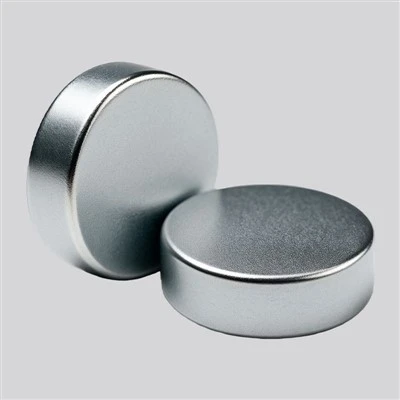
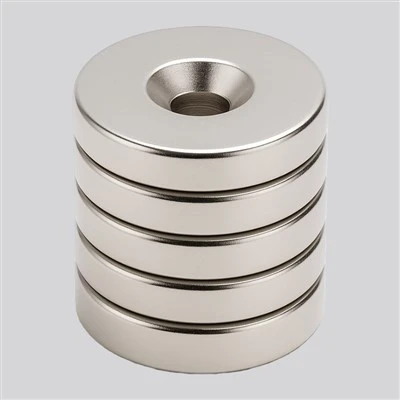
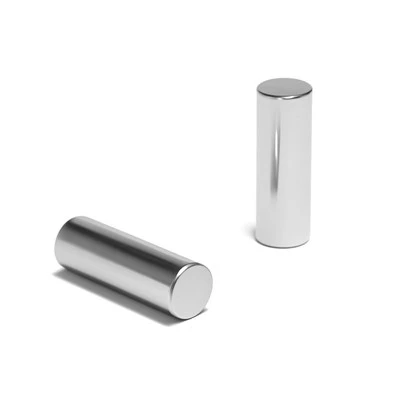
At Jinconn Magnet, we produce custom magnets specifically designed for sensor integration. Our product range includes precision bar magnets for encoder systems, miniaturized discs for micro-sensors, and U-shaped designs for concentrated magnetic fields. We work with clients to define the appropriate magnet grade, dimensions, and magnetization pattern based on the sensor's requirements and the operating environment.
Customization for Specific Application Needs
Off-the-shelf magnets often fail to meet the unique demands of custom automation systems. A sensor designed for a specific air gap, measurement range, or mounting orientation may need a magnet with tailored magnetic properties. Our team provides customized magnetic sensor magnet solutions, adjusting aspects such as:
①Magnet grade and temperature rating to match thermal conditions;
②Dimensions and tolerances for precise fit within assemblies;
③Magnetization pattern to produce the required field distribution;
④Coating selection for environmental protection;
We also supply complete magnet assemblies that simplify integration into sensors, actuators, and encoders. With 15 years of experience in magnet manufacturing, Jinconn combines strict quality control with flexible production capabilities, supporting projects from prototyping to volume production. Our ISO 9001 and ISO 14001 certifications reflect consistent quality and responsible manufacturing practices.