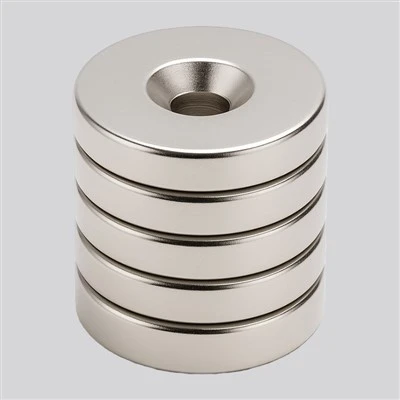


Product Overview & Application Scenarios
• Magnets for robot vacuum brushes provide magnetic attraction for compatible brush mounting and retention structures. Depending on the assembly design, they can help keep components in position while allowing convenient removal for cleaning or maintenance. The required holding force should be matched to the brush structure, operating vibration, and expected mechanical loads.
• Custom shapes and dimensions allow the magnets to fit limited installation spaces within brush holders and housing structures. Disc, ring, block, and other application-specific designs can be considered according to the available mounting space and assembly requirements.
• Magnetic grade, magnetization direction, and geometry can be selected according to the intended function and required magnetic performance. These parameters help balance holding force, installation space, and the operating requirements of the brush assembly.


• For different main brush, side brush, and removable brush configurations, magnets can be customized according to drawings, samples, or specified dimensions. This flexibility supports integration into different robotic vacuum designs without relying on a single standard specification.
• Material selection and surface protection can also be evaluated according to operating temperature, moisture exposure, and contact with cleaning agents. For applications involving vibration or repeated mechanical loads, testing the complete assembly helps verify retention performance and long-term suitability.
Applications
Custom magnets can be developed for robotic cleaning products where a magnetic function is incorporated into the brush or mounting structure.
• Main Brush Assemblies
Magnets may be integrated into compatible main brush holders to assist with positioning or retention. The design should account for vibration, rotation-related loads, and the mechanical support required during operation.
• Side Brush Mounting Systems
Compact magnetic components may be used in side brush attachment structures that are designed for magnetic engagement. Magnet geometry and retention force should be matched to the brush interface and operating loads.
• Removable Brush Modules
For brush systems intended to be removed during maintenance, magnets can support attachment and alignment when the mechanical design permits. The assembly must maintain adequate retention during normal operation while allowing the intended removal procedure.
• Replacement Brush Components
Custom magnet specifications can be developed for compatible replacement brush assemblies based on existing samples, drawings, or measured dimensions. Customers should confirm the original magnet's location, polarity, and functional requirements before ordering replacements.
• Wet-and-Dry Robotic Cleaning Equipment
For equipment exposed to moisture or cleaning solutions, magnet material, coating, encapsulation, and installation protection should be evaluated together. The suitability of the final design depends on the actual exposure conditions and product construction.
Technical Specifications
The following information should be confirmed during engineering review. Actual values are determined by the approved drawing and product requirements.
| Specification | Status |
|---|---|
| Product type | Custom magnets for robot vacuum brush assemblies |
| Material grade | To be specified |
| Dimensions and tolerances | According to approved drawing |
| Magnetization direction | To be specified |
| Surface treatment | According to operating conditions |
| Magnetic flux or holding force | To be defined by application requirements and test method |
| Operating temperature | Based on the selected material and assembly conditions |
| Mounting configuration | According to the brush holder design |
| Inspection requirements | According to agreed technical specifications |
For engineering evaluation, customers should distinguish between the magnet's intrinsic magnetic properties and the holding force of the complete assembly. Holding force varies with the contact geometry, air gap, mating material, and test conditions; it should not be inferred from magnetic grade alone.
Packaging & Transportation
Step 1: Visual inspection of NdFeB magnets
Step 2: Separation to avoid magnetic attraction
Step 3: Anti-rust and moisture protection applied
Step 4: Inner packing with plastic bags or trays
Step 5: Outer carton packing and palletizing

Contact Us:
Phone/WhatsApp/WeChat: +86 13829120676
Email: Info@jinconn.com
Address: Xiaohe Industrial Zone, Daojiao Town, Dongguan City, Guangdong Province, China.
Hot Tags: magnets for robot vacuum brushes, China magnets for robot vacuum brushes manufacturers, factory, countersunk magnet screw embedded type, countersunk magnetic holding discs, Heat Resistant Round Countersunk Magnets, High Adhesive Force Round Countersunk Magnets, self adhesive round countersunk magnets, Strong Stability Round Countersunk Magnets